Skip to content
Cities generate enormous volumes of tree trimmings every season. Street pruning, park maintenance, and storm cleanup produce branches, limbs, and brush that must be collected, processed, and disposed of efficiently. Hauling unprocessed green waste to distant landfills is expensive, time-consuming, and increasingly restricted by municipal regulations. The right equipment transforms this burden into a manageable operation—and in many cases, a revenue stream.
This article examines the equipment used for urban tree trimming waste disposal, how to select the right machines for your operation, and how modern processing systems convert green waste into valuable end products.
The Challenge of Urban Green Waste
Urban tree trimming produces waste with unique characteristics. It is bulky, irregularly shaped, widely distributed, and often mixed with leaves and foreign debris. A single municipality may collect hundreds of tons of branches each month during peak pruning seasons.
Traditional disposal involves manual bundling, truck loading, and transport to a central processing facility. This chain is labor-intensive and costly. Branches occupy significant truck volume, meaning multiple trips are needed to move material that could be reduced on-site. Municipal budgets and environmental targets increasingly demand more efficient alternatives.
The solution lies in mobile processing equipment that reduces volume at the point of generation. When branches are chipped or shredded immediately after trimming, the resulting material occupies a fraction of the original space and becomes a usable product rather than a disposal liability.
Mobile Tree Chippers and Shredders
The most important category of equipment for urban tree trimming waste is the mobile chipper-shredder. These machines are designed for on-site processing, allowing crews to convert branches directly into wood chips or mulch.
Drum chippers use a rotating drum fitted with cutting blades to produce uniform wood chips. They are well-suited for clean branches and trunks, delivering high throughput and consistent chip size. A typical municipal drum chipper can process branches up to 20 centimeters in diameter, reducing them to chips suitable for mulch, biomass fuel, or composting feedstock.
Disc chippers operate on a similar principle but use a flat rotating disc. They tend to produce slightly coarser chips and are often preferred for smaller-diameter material. Research comparing cutting mechanisms found that drum chippers exhibit the highest chipping capability, followed by disc, dual-cylinder, and flail designs.
Shredder-chipper combinations offer greater flexibility. Machines like the Komptech Axtor can operate in both shredder and chipper mode, processing green cuttings, waste wood, and trunks while delivering the desired end product—whether coarse mulch or fine chips for pellet production. This dual capability is valuable for municipalities handling varied feedstock.
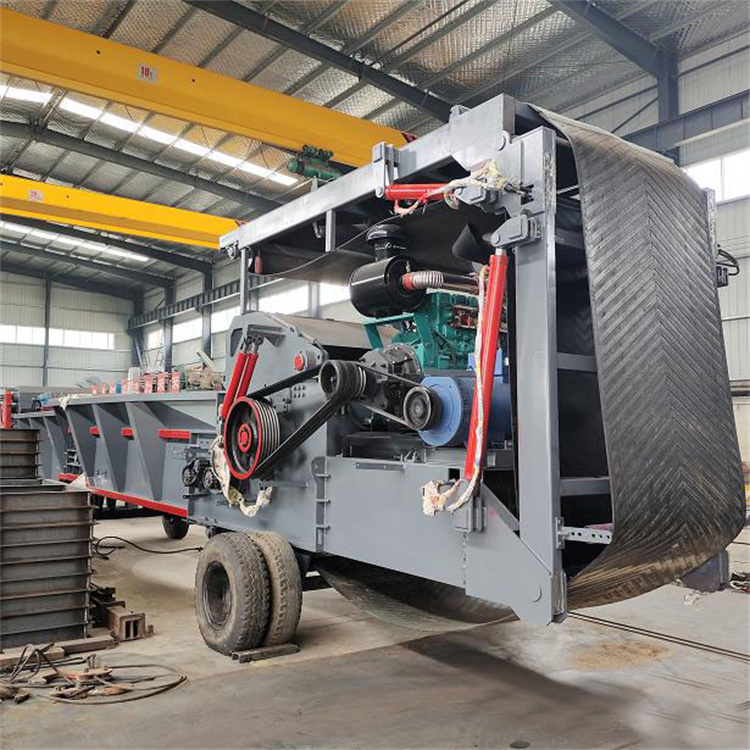
For operations that need to handle larger volumes, horizontal grinders provide higher throughput. The ProGrind horizontal grinder series, for example, processes brush, land clearing materials, and demolition wood waste, and can be converted from grinder to chipper configuration for fuel production or composting operations.
On-Board Crushing Vehicles
A specialized category of equipment has emerged in response to the specific demands of urban green waste management: the on-board crushing vehicle. These machines integrate collection, crushing, and transport into a single self-propelled unit.
A tree crushing vehicle typically consists of a truck chassis fitted with a high-power chipper and an enclosed collection container. Branches are fed into the intake, reduced to chips, and blown directly into the storage compartment. This design eliminates the need for separate collection and processing steps.
The operational advantages are substantial. Compared to traditional methods—manual bundling, loading, transporting to a central facility, and processing—on-board crushing vehicles reduce labor requirements, cut transportation costs, and enable immediate volume reduction at the work site. One truckload of processed chips can represent four to five truckloads of unprocessed branches.
Newer models increasingly feature electric or hybrid drive systems. These produce zero emissions and low noise, making them suitable for operation in residential areas and environmentally sensitive urban zones where diesel equipment may face restrictions.
Selecting Equipment for Your Operation
Choosing the right equipment depends on several operational factors. The following guidelines can help narrow the selection.
Assess your feedstock. Clean branches from routine pruning are best handled by drum or disc chippers. Mixed loads containing leaves, soil, and foreign material may require a shredder or combination machine. If you process stumps or large root balls, a horizontal grinder or tub grinder is necessary.
Determine your throughput requirement. Small municipal crews may process 1 to 3 tons per hour, suitable for a mid-range chipper with a 30 to 60 horsepower engine. Larger operations handling storm debris or city-wide pruning programs may require machines capable of 10 tons per hour or more, with power ratings from 100 to over 400 horsepower.
Consider mobility and access. Urban work sites present tight spaces, narrow streets, and restricted access. Compact, towable chippers with turntables offer exceptional maneuverability in residential and roadside settings. On-board crushing vehicles eliminate the need for separate towing.
Evaluate discharge options. Some chippers discharge directly into a truck bed or container; others have adjustable chutes that allow controlled placement of chips. For operations producing mulch for landscape use, a machine with an adjustable discharge chute and screen options provides better product control.
Plan for the end product. If the goal is mulch for landscaping, chip size and uniformity matter most. If the material will be sold as biomass fuel or sent to pellet production, finer and more consistent particle size is required. Hammer mills and secondary grinding equipment may be needed after primary chipping to achieve the desired specification.
Working with an experienced manufacturer simplifies equipment selection. Henan Manto Machinery Equipment Co., Ltd. offers a range of wood processing equipment suitable for urban green waste applications, from drum chippers to branch shredders. Their product lines are designed for durability and ease of maintenance, two factors that directly affect total cost of ownership in municipal operations.
The Resource Recovery Pathway
The equipment used for urban tree trimming waste disposal is only part of the equation. The processed material—wood chips, mulch, or shredded biomass—has multiple valuable end uses.
Landscape mulch is the most direct application. Chipped branches provide an attractive ground cover that suppresses weeds, retains soil moisture, and moderates soil temperature. Many municipalities use their own chipped material in parks, along medians, and in planting beds, eliminating both disposal costs and mulch purchase expenses.
Composting feedstock is another pathway. Wood chips provide the carbon-rich “brown” component in compost piles, balancing the nitrogen-rich “green” materials. Properly managed, tree trimming waste becomes a key input for municipal composting programs.
Biomass fuel offers the highest-value end use. Dried and processed wood chips can be burned in biomass boilers for heat and power generation, or further densified into wood pellets or briquettes for fuel applications. This pathway converts what was once a disposal cost into a marketable energy product.
Engineered wood products represent an emerging opportunity. Fine wood particles can be used in particleboard, fiberboard, and other composite wood products, though this requires more specialized processing and quality control.
Regulatory and Sustainability Considerations
Municipalities face increasing pressure to divert organic waste from landfills. Many jurisdictions have implemented bans on yard waste disposal in landfills, while others impose tipping fees that make landfilling economically unattractive.
Equipment that enables on-site processing directly supports these regulatory goals. By reducing the volume of material requiring transport, municipalities lower their carbon footprint associated with waste hauling. The CO₂ balance of wood chipping operations has been studied extensively. Research shows that small chippers used in urban areas produce between 0.5 and 4.49 kilograms of CO₂ per hour of operation, a figure that is offset by the carbon sequestration benefits of urban trees within a short period.
Emissions regulations are also driving equipment innovation. Electric and hybrid crushing vehicles produce zero tailpipe emissions and operate at significantly lower noise levels than diesel alternatives, making them compatible with stricter urban environmental standards.
Maintenance and Operational Best Practices
Even the best equipment requires proper care to deliver reliable performance. Key maintenance practices for urban tree trimming waste equipment include:
Blade maintenance. Chipper blades should be inspected regularly and sharpened or replaced when dull. Dull blades increase fuel consumption, reduce throughput, and produce lower-quality chips. A spare set of blades allows continuous operation during sharpening cycles.
Safety systems. Modern chippers include feed roller controls, emergency stops, and safety interlocks. Operators should be trained on these systems and should never attempt to clear jams while the machine is running.
Regular inspections. Daily checks of hydraulic systems, belts, and fasteners prevent minor issues from becoming major breakdowns. Following the manufacturer’s maintenance schedule is essential for warranty compliance and long-term reliability.
Operator training. Proper feeding technique—butt-end first, using push sticks for short pieces—reduces jams and improves productivity. Training also reduces the risk of accidents, which remain a concern in chipper operations.
Choosing the Right Partner
Equipment is only one part of a successful green waste management program. Municipalities and contractors benefit from working with manufacturers that provide not only machines but also technical support, parts availability, and application expertise.
Henan Manto Machinery has built its reputation on supplying reliable wood processing equipment to customers worldwide. With a focus on durability and operational efficiency, the company supports urban forestry and green waste management operations with equipment designed for the demands of professional use. Their biomass processing lines extend beyond chipping to include wood crushing and pellet production equipment, enabling full-chain resource recovery from tree trimming waste.
Conclusion
Urban tree trimming waste disposal has evolved from a logistical burden into a resource recovery opportunity. The equipment available today—mobile chippers, on-board crushing vehicles, horizontal grinders, and integrated processing systems—enables municipalities and contractors to reduce volume at the source, lower transportation costs, and produce valuable end products.
Selecting the right equipment requires careful assessment of feedstock characteristics, throughput needs, site conditions, and end-product goals. With the right machines and a clear resource recovery strategy, urban green waste becomes an asset rather than an expense. For operations seeking reliable processing equipment and technical guidance, Henan Manto Machinery Equipment Co., Ltd. offers a proven range of solutions for urban forestry and biomass applications.