The global push toward renewable energy has placed biomass at the center of sustainable power discussions. Unlike solar and wind, biomass offers a distinct advantage: it can be stored, transported, and converted into heat, electricity, or fuel on demand. But the efficiency of this conversion depends almost entirely on the machines doing the work. From shredding raw agricultural waste to pressing dense fuel pellets, the right equipment determines whether a biomass operation is profitable or impractical.
This article examines the most important biomass machines used in sustainable energy production today, how they function, and what to consider when selecting equipment for your operation.
The Role of Biomass in the Renewable Energy Mix
Biomass energy is derived from organic materials—agricultural residues, forestry waste, energy crops, and even municipal organic waste. It is considered carbon-neutral because the CO₂ released during combustion was previously absorbed by the plants during growth. According to research published in Scientific Reports, energy-efficient pelleting processes consume only about 2.8% of the energy potential of the feedstock, ensuring a highly favorable sustainability ratio.
The machines that process biomass fall into several categories: size reduction equipment, densification machines, thermal conversion systems, and power generation units. Each category serves a specific stage in the biomass supply chain.
1. Biomass Shredders and Crushers: The First Step
Before biomass can be converted into energy, it must be reduced to a manageable particle size. Raw materials like straw bales, wood chips, and forestry residues are typically too large for direct processing. This is where biomass shredders and crushers come in.
Dual-shaft shredders are the workhorses of agricultural waste processing. They operate on a low-speed, high-torque principle that is particularly effective for whole bale materials. The opposing cutting action of the equipment’s blades reduces baled straw into smaller particle sizes, ensuring that downstream combustion systems can achieve complete burn.
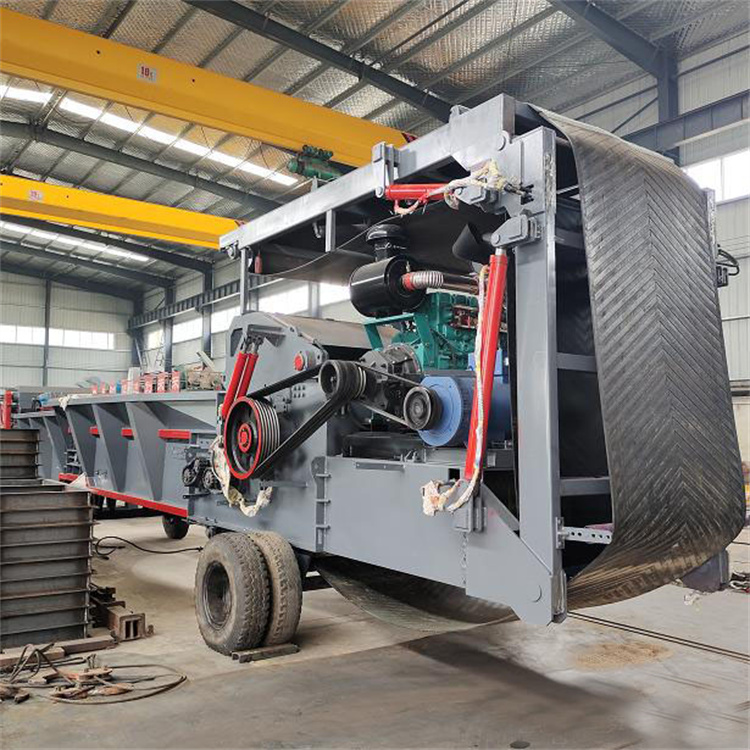
Drum chippers serve a complementary role, producing uniform wood chips from branches, logs, and forestry waste. These chips can then be fed into pellet machines or directly into biomass boilers. For operations requiring fine particle sizes, hammer mills and wood powder machines further reduce material to micron-scale powder suitable for high-density pellet production.
The finished output from these machines has multiple applications: power generation, papermaking, artificial board manufacturing, and ethanol production. After shredding, straw can be converted into organic fertilizer, fuel, and industrial raw materials, reducing pollution and promoting circular economy principles.
When evaluating shredding equipment, throughput capacity is a critical consideration. Industrial models range from 200 kg/h for small operations to over 3,000 kg/h for large-scale facilities. Power requirements vary accordingly, from 5.5 kW to 90 kW.
2. Biomass Pellet Machines: Densification for Efficient Fuel
One of the most transformative technologies in the biomass sector is the pellet machine. These machines compress raw organic materials into dense, uniform pellets that can be used as a direct substitute for coal in heating and power applications.
A biomass pellet machine works by forcing ground biomass through a die under high pressure. The friction and pressure generate heat that activates lignin—the natural binder in plant material—causing the particles to fuse into solid cylinders. This technology enables the production of a dense, storable, and carbon-neutral fuel source from locally available biomass.
Ring die pellet machines are the industry standard for commercial production. They offer higher throughput and more consistent pellet quality than flat die alternatives, though they require higher capital investment. A ring die machine can produce anywhere from 500 kg/h to over 5 tons per hour, depending on the model and motor power.
Flat die pellet machines are more suitable for small-scale and on-farm operations. They are simpler to operate, easier to maintain, and more affordable, making them accessible to rural communities and small businesses. Research on pellet machine design has focused on optimizing die hole diameter and roller configuration to improve pellet density and production efficiency.
The environmental impact of pellet production is significant. For every 10,000 tons of straw processed into pellet fuel, approximately 12,000 tons of CO₂ emissions and 80 tons of SO₂ emissions are avoided compared to open-field burning. This makes pellet machines a critical tool in both renewable energy generation and air quality improvement.
3. Biomass Briquette Machines: Alternative Densification
While pellet machines produce small cylindrical fuel, briquette machines create larger, denser blocks. Biomass briquettes are particularly favored in industrial settings where larger fuel units are more practical for boiler feeding.
Briquette machines use either screw press or hydraulic piston press mechanisms. Screw press technology has been shown to improve the physical quality and combustion characteristics of briquettes compared to piston press alternatives. The extrusion process creates briquettes with higher density and better mechanical durability.
The choice between pellet and briquette production depends on the end-use application. Pellets are preferred for residential heating and small-scale boilers, while briquettes are better suited for industrial furnaces and large-scale power generation.
4. Biomass Burners and Combustion Systems
Biomass burners are the direct heat-generating component of many sustainable energy systems. These machines are designed to combust biomass fuel—pellets, briquettes, or raw material—with maximum thermal efficiency and minimum emissions.
Modern high-efficiency biomass burners achieve thermal efficiencies of up to 90% through improved combustion chamber designs. The integration of flow deflectors results in uniform, complete combustion, with adjustable thermal power output. Compared to conventional burners, these designs reduce CO emissions by approximately 20% and NOx emissions by 15%.
For industrial applications, integrated gasifier-burner systems offer even greater efficiency. An integrated cross-draft gasifier and cyclonic burner system achieved a thermal efficiency of 94.2% in wood drying applications, reducing fuel consumption by up to 70.9% and cutting CO₂-equivalent emissions by 71%.
Residential-scale biomass combustion has also seen significant innovation. Small-scale biomass boilers and pellet stoves can now be coupled with solar panels or wind turbines to create hybrid energy solutions, paving the way for decentralized and sustainable household energy systems.
5. Biomass Gasifiers: Converting Solid Fuel to Syngas
Gasification is a thermochemical process that converts solid biomass into a combustible gas mixture known as syngas (or biosyngas). This gas can then be used in internal combustion engines, gas turbines, or boilers for heat and power generation.
A downdraft gasifier is one of the most common designs for small to medium-scale applications. The biosyngas produced typically has a calorific value ranging from 3.5 to 4.5 MJ/Nm³. Burner systems optimized for biosyngas have achieved thermal efficiencies of over 43% in cooking applications, demonstrating the viability of gasification for community-scale energy.
The syngas from biomass gasification can replace 70–80% of the conventional fuel required by modified internal combustion engines, making it an attractive option for rural electrification and industrial power generation.
6. Combined Heat and Power (CHP) Systems
For maximum energy utilization, combined heat and power systems integrate biomass conversion with electricity generation. These systems capture waste heat from power production and use it for heating, achieving overall efficiencies that far exceed separate generation.
Stirling engine-based CHP systems represent an emerging technology for small-scale applications. A micro-CHP system combining a downdraft biomass gasifier and a Stirling engine has demonstrated the ability to produce both electric power and useful heat from carbon-neutral biomass, contributing to global warming mitigation efforts.
For larger installations, steam turbines remain the proven technology. Biomass-fired steam turbines ranging from 150 kW to over 20 MW are deployed in agricultural and wood processing industries worldwide, with waste steam often used for on-site drying operations.
Selecting the Right Equipment
Choosing biomass machinery requires balancing several factors: feedstock type, desired output, available space, and budget. A few practical guidelines:
-
For agricultural residues: dual-shaft shredders paired with ring die pellet machines offer the most efficient processing pathway.
-
For forestry waste: drum chippers and hammer mills prepare material for both pellet and briquette production.
-
For industrial heat: high-efficiency burners and gasifier systems provide the most direct conversion route.
-
For rural electrification: small-scale gasifiers and Stirling engine CHP systems offer decentralized power solutions.
Working with an experienced manufacturer can simplify this decision. Henan Manto Machinery Equipment Co., Ltd. has spent 25 years providing wood shredding equipment and biomass solutions to global customers, with product lines spanning drum chippers, wood chip crushers, wood powder machines, and biomass pellet machines. Their equipment is designed to help businesses improve production efficiency and achieve sustainable development goals.
The Future of Biomass Machinery
The biomass machinery sector continues to evolve. Mobile pelletizing units now allow on-site processing of agricultural waste, reducing transportation costs and enabling small-scale farmers to participate in the bioenergy economy. Advanced torrefaction technologies are improving the energy density and storage stability of biomass fuels. And intelligent control systems are optimizing combustion parameters in real time to maximize efficiency while minimizing emissions.
For anyone considering entry into the biomass energy sector, the equipment landscape offers solutions for every scale of operation. The key is to match the machine to the feedstock, the application, and the long-term energy goals of the operation. As the global demand for renewable energy continues to grow, biomass machinery will remain an essential component of the sustainable energy infrastructure.
For more information on biomass processing solutions, visit Henan Manto Machinery to explore their full range of renewable energy equipment.