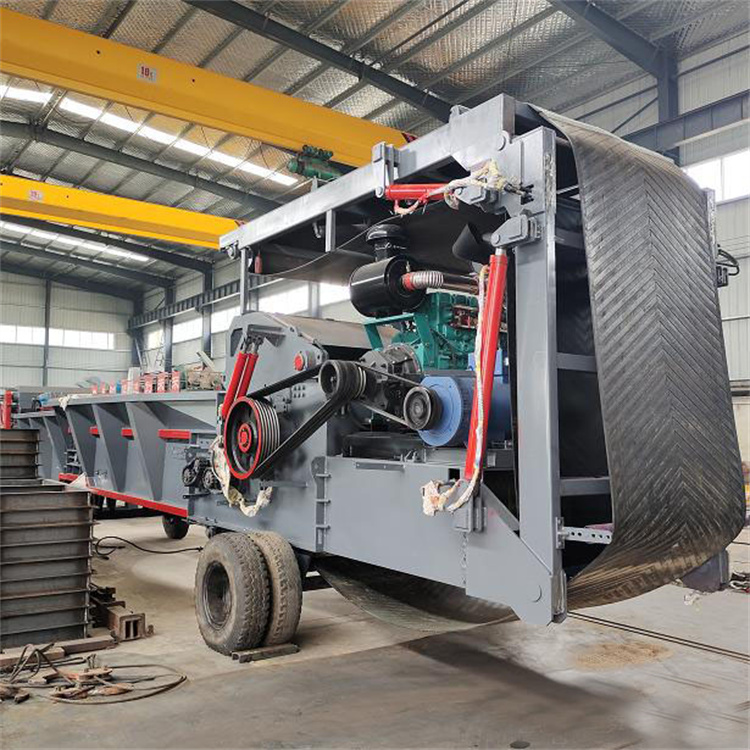
If you run a wood processing plant, a palm oil mill, or a tree service company in Malaysia, you know one thing for sure: wood waste piles up fast. From rubberwood offcuts to palm oil empty fruit bunches (EFB), from sawmill residues to logging debris – the volume of biomass is staggering. And the smartest way to handle it? Turn it into valuable wood chips with a reliable industrial wood chipper.
But here‘s the million‑ringgit question: who are the best industrial wood chipper suppliers in Malaysia? With so many local distributors, Chinese manufacturers, and European brands competing for your attention, how do you choose a supplier that offers durable machinery, fair pricing, and real after‑sales support? In this article, I‘ll walk you through the Malaysian wood chipper market, highlight the top players, and give you practical tips to avoid costly mistakes. I’ll also introduce you to a global manufacturer that has been gaining trust among Malaysian buyers – Henan Manto Machinery Equipment Co., Ltd. (also known as Henan Manto Machinery). Let’s dive in.
Why Malaysia Needs Industrial Wood Chippers
Malaysia is one of the world‘s largest producers of palm oil and a major exporter of rubberwood and tropical timber. The country generates millions of tons of biomass residues every year:
Palm oil industry – Empty fruit bunches (EFB), palm kernel shells (PKS), mesocarp fibre.
Rubberwood sector – Logging offcuts, sawmill trimmings, furniture factory waste.
General timber – Forestry thinning, wood processing leftovers.
Without proper processing, this biomass becomes an environmental burden – landfilled, burned openly, or left to rot. But with an industrial wood chipper, these residues become valuable raw materials for:
Biomass power plants (co‑firing with coal)
Particleboard and MDF factories
Wood pellet production
Animal bedding and mulch
As Malaysia pushes toward renewable energy and circular economy goals, the demand for reliable wood chipping equipment has skyrocketed. And with that demand comes a growing number of suppliers. So how do you pick the right one?
Types of Industrial Wood Chippers You‘ll Find in Malaysia
Before talking about suppliers, let’s quickly review the main types of wood chippers available in the Malaysian market. Understanding the differences will help you ask the right questions.
Drum Wood Chipper
A drum-type wood chipper uses a heavy rotating drum with knives. It’s ideal for processing large volumes of branches, logs, and mixed wood waste. Drum chippers are generally more forgiving of wet and crooked material. Most commercial tree service companies and biomass plants prefer drum chippers for their high throughput.
Disc Wood Chipper
A diesel mobile disc chipper has a steel disc with knives on its face. It produces very uniform chips and is often used in stationary mill yards or for producing premium decorative chips. Disc chippers are lighter and less expensive, but they struggle with twisted or branched material.
Mobile vs Stationary
Mobile chippers (trailer‑mounted or self‑propelled) are essential for tree service companies that move from job to job. For rough terrain, a crawler tree branch chipper offers superior mobility.
Stationary chippers are bolted to the floor in a mill or plant, fed by conveyors.
Most Malaysian buyers today want mobile drum chippers because they offer flexibility – you can chip on‑site at a plantation or haul the machine back to your yard.
Top Industrial Wood Chipper Suppliers in Malaysia
The Malaysian market has three tiers of suppliers: local distributors of Chinese/European brands, direct Chinese manufacturers with local agents, and premium European/US brands. Let‘s look at each.
1. Henan Manto Machinery Equipment Co., Ltd. (Henan Manto Machinery)
Though headquartered in China, Henan Manto Machinery has become a serious contender in Malaysia. They design and manufacture a full range of industrial wood crushers, including drum chippers, disc chippers, and mobile units. What sets them apart for Malaysian buyers?
Tailored for tropical biomass – Their machines are engineered to handle high‑moisture palm EFB, rubberwood, and mixed tropical hardwoods without clogging.
Mobile options – They offer tow‑behind drum chippers with diesel engines (100–400 HP) that are road‑legal in Malaysia.
Local support – Henan Manto has partnered with engineering firms in Penang, Johor, and Selangor to provide on‑site installation, training, and spare parts.
Cost‑effective – Their equipment costs 30–40% less than European equivalents, yet uses Hardox knives and heavy‑duty rotors.
A biomass plant in Johor recently installed two Henan Manto Machinery drum chippers to process rubberwood offcuts into 12 mm chips at 30 tons per hour. The plant manager told me their downtime dropped by 60% compared to their previous machines.
2. Local Distributors (e.g., Palmgruppen, Biofuel Engineering)
Several Malaysian companies import and distribute wood chippers from Taiwanese, Indian, and Chinese factories. Their advantage is proximity – they speak the language, understand local regulations, and have service vans. However, their product range is often limited to mid‑capacity machines (under 15 tons/hour), and prices can be 50–100% higher than buying direct from a manufacturer like Henan Manto.
3. Premium European & US Brands (Morbark, Bandit, JENZ)
These are the Rolls‑Royces of wood chippers. They offer unmatched build quality, advanced safety features, and excellent resale value. But they come with a price tag – often 80,000–150,000 for a 12‑inch drum chipper, plus long lead times for spare parts (4–8 weeks). For most Malaysian SMEs, the cost is hard to justify unless you have very high volume and a dedicated mechanic.
Key Factors to Consider When Choosing a Supplier
Based on my conversations with Malaysian plant managers and tree service owners, here are the five most important criteria – don‘t skip any.
1. Local Spare Parts Availability
A broken knife or worn bearing should not shut you down for weeks. Ask the supplier: “Do you stock common wear parts (blades, screens, bearings) in Malaysia? What is your typical delivery time to Kuala Lumpur or Johor Bahru?“ Suppliers like Henan Manto Machinery have invested in regional warehouses, which makes a huge difference.
2. Suitability for Local Biomass
Malaysian wood waste is tough – rubberwood is hard, palm EFB is fibrous and wet, and mixed tropical wood can contain hidden metal. A European chipper designed for softwood may struggle. Ask for a test run using your own material. A confident supplier will offer a video test or invite you to see a working machine.
3. After‑Sales Support
Will they send a technician for commissioning? Do they offer WhatsApp video support? Is there a training manual in Bahasa Malaysia? These details matter. I‘ve seen cheap machines become very expensive because no one knew how to adjust the knife gap.
4. Compliance with DOSH and Environmental Rules
Malaysia‘s Department of Occupational Safety and Health (DOSH) has strict noise and safety standards. Make sure the chipper has CE or equivalent certification, and that the supplier can provide necessary documentation for import and operation.
5. Total Cost of Ownership
Don’t just look at the purchase price. Ask about blade replacement frequency (every 150–300 hours), energy consumption (kW per ton), and maintenance intervals. A cheaper machine that eats blades every 100 hours may be more expensive in the long run.
Prices You Can Expect (2026 Estimates)
| Machine Type | Capacity | Price Range (MYR / USD) |
|---|---|---|
| Small disc chipper (mobile) | 5–10 t/h | RM 40k–80k ($9k–18k) |
| Medium drum chipper (stationary) | 15–25 t/h | RM 100k–200k ($22k–44k) |
| Heavy‑duty drum chipper (mobile, 12‑15 inch) | 30–50 t/h | RM 180k–350k ($40k–77k) |
| Premium European brand (similar capacity) | 30–50 t/h | RM 350k–600k ($77k–132k) |
Chinese brands like Henan Manto Machinery typically fall in the lower‑mid range, offering excellent value for money.
Common Mistakes Malaysian Buyers Make
Buying on price alone – The cheapest machine often comes from a trader who disappears after delivery.
Ignoring knife quality – Soft knives need sharpening every day, killing productivity.
No spare parts strategy – One broken conveyor belt and the whole operation stops for a month.
Underestimating power requirements – Some chippers need 200A three‑phase power that your site doesn‘t have.
Avoid these by working with a supplier that offers a complete package: machine, training, spare parts list, and clear warranty terms.
Real‑World Example: A Sawmill in Muar
A sawmill in Muar was paying RM 15,000 per month to haul away rubberwood offcuts. They bought a used drum chipper from a local dealer, but it kept jamming. After three months of frustration, they contacted Henan Manto Machinery Equipment Co., Ltd. and purchased a new 15‑inch drum chipper with auto‑feed and a magnetic separator.
Now they produce 25 tons of chips per day, sell them to a nearby MDF plant, and have turned a cost centre into a profit centre. The payback period was just eight months.
Conclusion: Your Next Steps
Finding the right industrial wood chipper supplier in Malaysia doesn’t have to be a headache. Start by defining your feedstock, desired chip size, and budget. Then shortlist three suppliers – one local distributor, one Chinese manufacturer with local support (like Henan Manto Machinery), and one premium brand. Ask each for a test run, a spare parts guarantee, and references from Malaysian customers.
Don‘t rush. A good wood chipper will serve you for 10–15 years. A bad one will haunt you every week. Take your time, visit a working installation if possible, and choose a partner that values your business – not just your order.
Whether you’re processing palm EFB, rubberwood, or general timber waste, the right machine from the right supplier will turn your wood waste into wood profit.