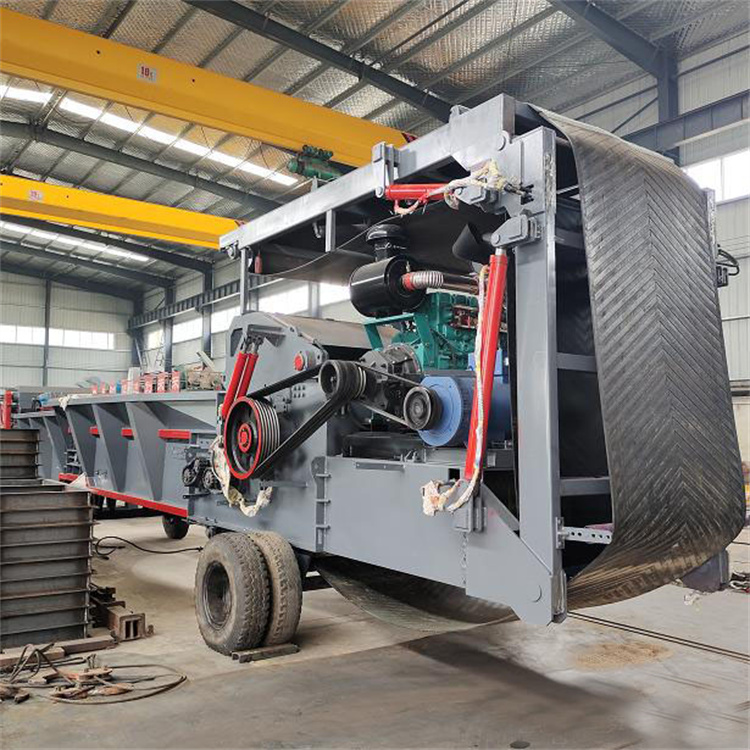
If you run a woodshop, a furniture factory, a landscaping crew, or a pallet recycling operation, you know the pain of wood waste disposal. Every month, you pay a landfill to take away what is essentially shredded money. Hauling trucks back and forth. Dump fees per ton. Labor hours spent stacking, sorting, and loading. The costs add up fast — and they never stop.
But here’s what I’ve learned after talking to dozens of business owners: you don’t have to keep paying to get rid of wood waste. A heavy‑duty industrial wood crusher turns that waste into a manageable, saleable product. In this article, I’ll show you real numbers from real businesses that cut disposal costs by 70–85%, created new revenue streams, and paid off their equipment in months — not years. I’ll also introduce you to Henan Manto Machinery Equipment Co., Ltd. , a manufacturer that has been helping businesses across the world make that same shift.
The True Cost of Wood Waste Disposal
Most business owners focus on the obvious expenses: landfill tipping fees, trucking, labor. But the hidden costs are often bigger. Unprocessed wood waste takes up massive space in dumpsters and trucks, requiring multiple trips. Each trip costs fuel, driver time, and vehicle wear. Some landfills charge by weight (typically $50–$110 per ton for commercial wood waste), others by volume. And those rates are rising every year.
One furniture manufacturer in England was spending so much on waste disposal that they decided to shred their own scrap and burn it for biomass heat instead. The result: lower disposal costs and lower heating bills.
The math is simple. Every ton of wood you send to landfill is money you could keep. And every ton you process on‑site is a ton you don’t pay to haul away.
How Wood Crushers Cut Costs (and Create Revenue)
A wood crusher — also called a wood chipper, shredder, or grinder — reduces bulky wood waste into uniform chips. That simple transformation unlocks several sources of savings and income.
1. Immediate Disposal Cost Reduction
The most obvious benefit: you stop paying someone else to take your waste. A landscaping company that installed a heavy‑duty wood crusher cut its annual disposal fees from $9,000 down to just $1,500 — an 83% reduction. Labor input dropped by 65%, and the number of transport vehicles needed fell by 80%. Another company processing forestry waste saw its annual disposal fee fall from $10,500 to $2,200, an 79% reduction, with vehicle trips down 85% and labor down 70%.
2. Volume Reduction Slashes Hauling Costs
Unchipped wood is bulky — full of air gaps and awkward shapes. That means more truck trips to haul away the same tonnage. Once chipped, the volume shrinks dramatically (often by a factor of 10:1). More material fits on each truck, so fewer trips are needed. Fuel costs drop. Vehicle wear drops. Time wasted on the road drops.
3. Turn Waste into Revenue
This is where the real magic happens. Instead of paying to get rid of wood waste, you can sell the chips.
One furniture manufacturer in Guangdong was paying $200 per week to dispose of waste. After installing a wood chipper, they started selling the output for $150 per ton. “That’s not just savings — it’s profit,” their manager told me. The machine paid for itself in six months.
Another operation generating 1.2–2.5 tons of chips per hour now sells the output for biomass fuel and particleboard production. They turned a cost center into a profit center, with ROI in under six months for mid‑sized operations.
A global compressor manufacturer, Ingersoll Rand, installed a wood chipper at its Sedalia facility and diverted 878,460 pounds of wood waste from landfills. The project produced $85,000 in operational savings over just 242 days. Their disposal cost savings alone came to $16,730, with additional savings from reduced truck trips and lower energy use.
4. Replace Purchased Fuel or Mulch
If your facility uses heat or steam, chipped wood can fuel a biomass boiler. An English furniture manufacturer now runs its entire heating system on chips made from its own production waste, eliminating both disposal costs and fuel bills. For landscaping companies, chipped wood becomes mulch — which you can use on your own jobs or sell to nurseries and homeowners.
Real‑World Case Studies
Let me share three specific examples that show the range of savings possible.
Case 1: Urban Landscaping Company
This company prunes trees across a city. They used to haul branches to a landfill — expensive, time‑consuming, and bad for their environmental image. After installing a comprehensive wood crusher, they now process 50+ tons daily. Annual disposal fees dropped from $9,000 to $1,500 (83% reduction). Transport vehicles reduced by 80%. Labor input dropped 65%. The chips are now reused for compost, biomass fuel, and garden covering, creating additional income on top of the savings.
Case 2: Pallet Recycling Business
Reardon Pallet Co., based in Kansas, was outsourcing wood waste disposal. As the business grew, costs spiraled. They brought processing in‑house with industrial grinders. The shift turned a significant expense into a profit center. Processed material is now 4–5 times more compact than raw waste, drastically reducing hauling costs. The system paid for itself faster than the projected 2.5–3 years.
Case 3: Large Forestry Waste Operation
A customer processing forestry and orchard waste needed continuous, reliable chipping. Their old equipment kept jamming and produced uneven chip sizes. After upgrading to a heavy‑duty drum chipper, they now process 12–18 tons per hour — over 90 tons daily. Annual disposal fees dropped from $10,500 to $2,200 (79% reduction). Transportation vehicles reduced by 85%. Labor input dropped 70%. The uniform, high‑quality chips now supply biomass power plants and wood‑based panel factories.
How Quickly Does a Wood Crusher Pay for Itself?
Based on the cases above, payback periods vary by volume, but the trend is clear:
Mid‑sized operations (1.2–2.5 tons/hour) report ROI within 6 months.
Smaller businesses with lower volumes might see payback in 12–18 months.
High‑volume operations processing 50+ tons daily can recoup their investment in 2–6 months from disposal savings and chip sales combined.
One analysis found that wood chips can be profitably transported up to 100 km, with average profits decreasing as distance increases. The key takeaway: every ton you process on‑site saves $170 compared to landfill disposal.
Even a small operation generating 10 tons of waste per month would save over $1,700 monthly — that’s $20,000+ per year.
Which Wood Crusher is Right for Your Business?
Different operations need different machines.
Mobile wood crushers — Best for landscaping crews and tree services that move between job sites. These towable units let you chip on‑site, eliminating hauling entirely. A crawler‑mounted chipper can handle rough terrain and steep slopes.
Stationary wood crushers — Ideal for factories, pallet recyclers, and woodshops that generate waste in one location. These can be integrated with conveyors and sorting systems for continuous operation.
Heavy‑duty drum chippers — Designed for forestry waste, whole trees, and thick branches. They handle high volumes (12–18 tons/hour) and run continuously without jamming.
Portable wood crushers — A middle ground: mobile enough to move around a yard but not designed for highway towing.
Henan Manto Machinery Equipment Co., Ltd. offers models across all these categories. Their heavy‑duty drum chippers and mobile crushers are built for demanding commercial use, with hardened blades, auto‑feed systems, and dust suppression to meet environmental standards. Many customers report payback periods well under a year.
Steps to Start Saving Today
If you‘re convinced that a wood crusher makes sense for your business, here’s a simple roadmap.
Step 1 — Audit your current waste. How many tons of wood waste do you generate per week? What are you paying in disposal fees, hauling, and labor? Get a baseline number.
Step 2 — Calculate potential savings. Use the examples above as benchmarks. If you produce 20 tons/month at $80/ton landfill fee, that‘s $1,600/month just in tipping fees — not counting hauling and labor. A wood crusher could eliminate most of that.
Step 3 — Explore revenue opportunities. Talk to local biomass plants, mulch yards, or animal bedding suppliers. Ask what they pay for clean wood chips. Even $20–50 per ton turns a liability into an asset.
Step 4 — Choose the right machine. Don‘t oversize, but don’t undersize either. A machine that‘s too small will jam constantly and frustrate your crew. Get a model rated for at least your peak daily volume.
Step 5 — Train your team. A good wood crusher is simple to operate, but proper feeding, knife maintenance, and dust control make a big difference in longevity. Manufacturers like Henan Manto Machinery provide training and spare parts support to keep your operation running.
Common Mistakes to Avoid
I‘ve seen businesses buy a wood crusher and still struggle with high costs. Here’s what they did wrong:
Buying on price alone — The cheapest machine often has soft blades that dull in days, no dust control, and no local parts support. The true cost is downtime.
Ignoring moisture content — Wet wood clogs screens and reduces chip quality. If your waste is consistently wet, you may need a drying step or a different machine type.
Forgetting the dust — Fine wood dust is flammable and hazardous. A crusher with a dust‑suppression system or dust collection port protects your workers and your facility.
No spare parts plan — A broken blade or belt can shut you down for weeks if spares aren‘t stocked. Ask your supplier for a recommended spare parts list and keep critical items on hand.
Summary: The Numbers Speak for Themselves
Here’s a quick summary of what a wood crusher can do for your business:
| Metric | Typical Improvement |
|---|---|
| Annual disposal fees | Down 70–85% |
| Transport vehicle trips | Down 80–85% |
| Labor for waste handling | Down 65–70% |
| Waste volume | Reduced up to 90% |
| ROI payback period | 6–18 months |
These aren‘t theoretical projections — they’re real results from real businesses. A wood waste disposal cost savings initiative doesn‘t require a six‑figure budget or a huge facility. It starts with the right machine and the commitment to stop paying to throw away value.
Henan Manto Machinery Equipment Co., Ltd. has helped companies across dozens of countries make that transition. Their equipment is engineered for heavy continuous use, backed by spare parts support, and priced to deliver a rapid return on investment. If you’re ready to turn your wood waste from an expense into an asset, it‘s time to take a serious look at a wood crusher. The savings — and the profit — are waiting.