Skip to content
When you’re working in the woods, your equipment has to earn its keep. Branches, logs, and debris pile up fast. Hauling it off-site is expensive. Leaving it piled up is a fire hazard. The smart move is chipping on‑site, but you need a machine that can handle the relentless demands of forestry work. So what are the best heavy duty wood chippers for forestry operations?
I’ve spent years watching forestry crews in action—and I’ve seen what separates a workhorse from a headache. This isn’t about homeowner machines that chew through 2‑inch twigs. This is about serious industrial chippers that process 18‑inch logs, run all day in muddy conditions, and keep coming back for more. In this guide, I’ll help you understand the key choices: drum versus disc, wheeled versus tracked, what capacity you actually need, and which brands are worth your money.
What Makes a Wood Chipper “Heavy Duty” for Forestry?
Before we dive into specific machines, let’s define what actually matters in a forestry chipper. A heavy duty wood chipper for forestry operations isn’t just a bigger engine. It’s a machine built to handle continuous, demanding work in challenging environments.
Key features include:
-
Large diameter capacity – 12 inches and up, often 18–20 inches for serious land clearing.
-
High‑volume output – 20–50 tons per hour or more.
-
Industrial‑grade construction – Thick steel frames, heavy‑duty axles, and components designed for thousands of hours.
-
Reliable power – Diesel engines with 100–400 HP for the torque needed to chew through hardwood and wet wood.
-
Durability on rough terrain – Robust suspension, high ground clearance, and options for tracked mobility.
Drum Chipper vs Disc Chipper: Which Is Better for Forestry?
This is the most common debate when choosing a commercial wood chipper. Both have their place, but for forestry operations, one usually comes out ahead.
Drum Chippers: The Forestry Workhorse
A drum chipper uses a large rotating drum with blades that pull material in aggressively. It’s ideal for high‑volume production and can handle large logs, irregular branches, and mixed wood waste continuously. Drum chippers are particularly well‑suited for biomass production and industrial settings where throughput is king.
Advantages for forestry:
-
High processing capacity – Handles large volumes and big logs.
-
Automated feeding – Many models feature hydraulic feed systems that pull material in, reducing labor.
-
Forgiving of diverse material – Crooked branches, wet wood, and mixed debris are less of a problem.
-
Ideal for biomass fuel – Produces chips suitable for power plants and pulp mills.
Drawbacks:
-
More complex maintenance – Multiple blades and feed rollers mean more moving parts.
-
Higher initial investment – But better ROI for large‑scale production.
-
Slightly less uniform chips – Compared to disc chippers, but fines can often be sold as byproduct.
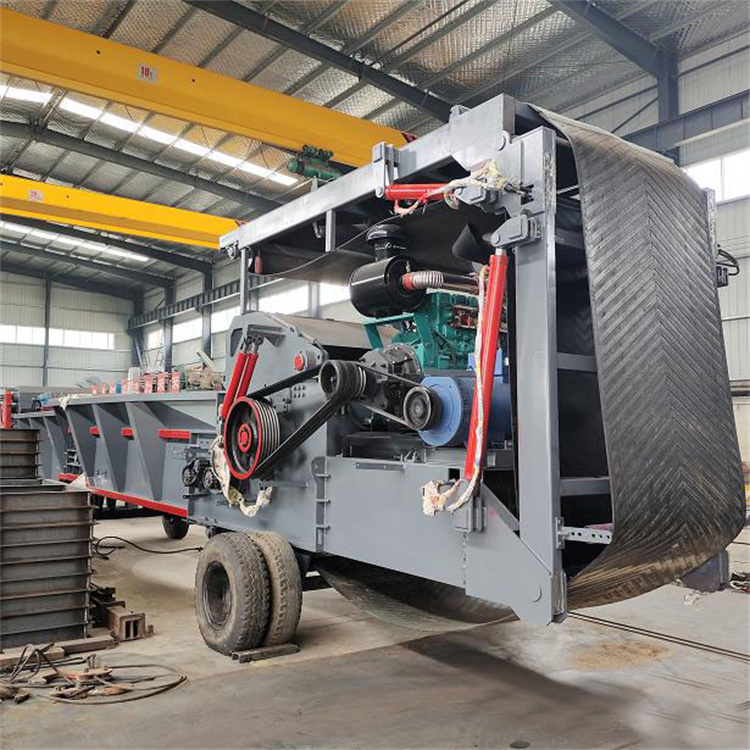
Henan Manto Machinery Equipment Co., Ltd. offers a range of drum chippers designed for heavy continuous use. Their diesel-powered mobile drum chipper is engineered to handle large-diameter logs and whole trees directly in remote forests, with production capacities ranging from 5–20 tons per hour and power outputs of 155–380 HP.
Disc Chippers: Precision and Simplicity
A disc chipper uses a rotating steel disc with knives mounted on its face. It produces very uniform chips, making it ideal for landscaping mulch or pulp production. Disc chippers have a simpler mechanical design, lower initial cost, and are generally easier to maintain.
Advantages:
-
Lower cost – More affordable upfront.
-
Easy maintenance – Simpler design with fewer moving parts.
-
Uniform chips – Cleaner chip quality, ideal for premium markets.
-
Compact and portable options – Good for smaller operations.
Drawbacks:
-
Lower throughput – Not designed for continuous high‑volume forestry work.
-
Struggles with crooked material – Branches and irregular logs can be a problem.
-
More manual feeding – Smaller models often lack automated feed systems.
The Verdict for Forestry: For large‑scale forestry operations, drum chippers are the clear winner. Their high throughput, automated feeding, and ability to handle diverse material make them the go‑to choice for land clearing, logging, and biomass production.
Wheeled vs Tracked: Mobility Matters in the Bush
You’re not working in a factory. You’re working on uneven ground, muddy slopes, and tight landings. How your chipper moves matters as much as how it chips.
Wheeled (Tow‑Behind) Chippers
Wheeled chippers are designed for mobility and convenience. They’re easy to tow behind a truck and ideal for operations that move between sites regularly.
Pros for forestry:
-
Easy to transport – Highway‑towable models let you move between landings quickly.
-
Lower cost – Generally more affordable than tracked models.
-
Sufficient for many sites – Works well on firm, relatively flat ground.
Cons:
-
Limited on rough terrain – Can get stuck in mud, soft ground, or steep slopes.
-
Weight restrictions – Heavier machines require heavier trucks to tow.
Tracked Chippers
Tracked chippers are built for stability and are perfect for difficult terrains. They’re often used in forestry or areas with uneven ground where wheeled chippers might struggle.
Pros for forestry:
-
Superior stability – Tracks provide better grip on rough, uneven ground.
-
Access to difficult sites – Can go places wheeled machines can’t.
-
Heavy‑duty – Built for larger projects and tougher materials.
Cons:
-
Less mobile on roads – Not designed for highway towing; require trailers for transport.
-
Higher cost – More expensive due to the robust track system.
The Verdict: If you work on a variety of sites with challenging terrain, a tracked chipper is worth the investment. If most of your work is on firm ground and you move frequently, a wheeled model may be more practical.
Capacity: How Much Do You Really Need?
Choosing the right capacity is about matching the machine to your typical material. Oversizing wastes fuel; undersizing kills productivity.
-
Small forestry crews (processing branches and small trees): Look for a 6–10 inch capacity chipper. Throughput around 10–20 tons per hour. Power: 75–120 HP.
-
Medium forestry operations (land clearing, logging residue): 10–15 inch capacity. Throughput 20–40 tons per hour. Power: 150–250 HP.
-
Large‑scale land clearing (whole trees, large logs): 15+ inch capacity. Throughput 40+ tons per hour. Power: 250–400 HP.
Pay attention to the throat opening dimensions, not just the advertised “max diameter.” A machine that claims 12 inches might choke on a 12‑inch oak because the feed opening is only 10 by 14 inches. Look for a wide intake that lets you feed whole branch piles without constant trimming.
Top Heavy Duty Wood Chippers for Forestry
Let’s look at some of the leading options in the heavy‑duty forestry category.
High‑Capacity Industrial Chippers
The Pezzolato PTH 1200/1000 is a high‑capacity biomass chipper designed for industrial forestry. It features a large chipper drum (1000 mm) and a wide feeding opening (1200 mm), capable of producing up to 250 m³ per hour of uniform chips. It can process logs up to 800 mm in diameter, making it suitable for power stations, biomass gasifiers, and large‑scale wood management.
The VORTEX V18‑32 is a serious 18‑inch commercial chipper built for forestry, land clearing, and storm cleanup. It features a wide 18″ x 32″ intake and the patented Anti‑Clog VORTEX Chamber to keep material flowing. With up to 173 HP of diesel power, it delivers class‑leading chipping capacity and stays towable on real‑world jobsites.
Chinese Manufacturers Making Waves
Henan Manto Machinery Equipment Co., Ltd. has been gaining traction among forestry professionals. Their diesel mobile disc chipper is a self-propelled, towable unit that transforms logs, branches, and scrap wood into uniform chips directly at remote or off-grid locations. For larger operations, their diesel-powered mobile drum chipper delivers high-torque, on-site processing for large logs and whole trees, ideal for remote forestry operations.
Many customers report payback periods well under a year. Their mobile drum chippers are built specifically for commercial forestry, with capacities ranging from 5–20 tons per hour and power options up to 380 HP.
Key Features to Look For
When you’re comparing models, don’t just look at the spec sheet. Here’s what actually matters on the job site:
-
Alloy or hardened blades – Cheap blades dull within hours. Look for high‑speed alloy blades that can handle continuous operation.
-
Self‑feeding system – A hydraulic feed roller that senses engine load and automatically pulls material in is non‑negotiable for productivity.
-
Easy knife access – A machine that takes 20 minutes to change blades versus two hours makes a huge difference over a season.
-
Magnetic separator – A magnet over the infeed catches nails and wire before they reach the drum—saving thousands in blade replacement costs.
-
Dust suppression – Fine wood dust is flammable and hazardous. Look for a chipper with a dust‑suppression system or dust collection port.
Common Mistakes to Avoid
-
Buying on price alone – The cheapest machine often uses soft steel components that wear out quickly. You’ll spend more on downtime and replacements than you saved.
-
Underestimating terrain – If you’re working on slopes or muddy ground, a tracked chipper is often worth the extra cost.
-
Ignoring chip quality – If you’re selling chips, uniform quality matters. Disc chippers produce cleaner chips for premium markets; drum chippers are better for biomass volume.
-
No spare parts strategy – A broken blade or belt can shut you down for weeks. Stock critical spares upfront.
Conclusion: Which Chipper Is Best for You?
The best heavy duty wood chipper for forestry operations depends on your specific needs:
-
For large‑scale land clearing and high‑volume biomass – A drum chipper with automated feeding, 15+ inch capacity, and diesel power is your best bet. Henan Manto Machinery offers diesel mobile drum chippers with 5–20 tons per hour capacity, built specifically for forestry and biomass processing.
-
For rough, uneven ground – A tracked chipper provides the stability and traction you need to keep working through muddy conditions.
-
For producing premium uniform chips – A disc chipper gives you consistent sizing that biomass plants and paper mills prefer.
-
For cost‑conscious buyers – A mid‑range tow‑behind drum chipper from a reliable manufacturer offers excellent value.
Take the time to assess your terrain, typical material, and production goals. Test the equipment with your actual material if possible. And don’t hesitate to reach out to experienced manufacturers—they’ve seen every scenario and can steer you toward the right solution.
Whether you choose a drum chipper for its volume, a disc chipper for its precision, or a tracked machine for its terrain‑conquering ability, the right heavy duty wood chipper will turn your logging residue from a liability into a valuable asset.