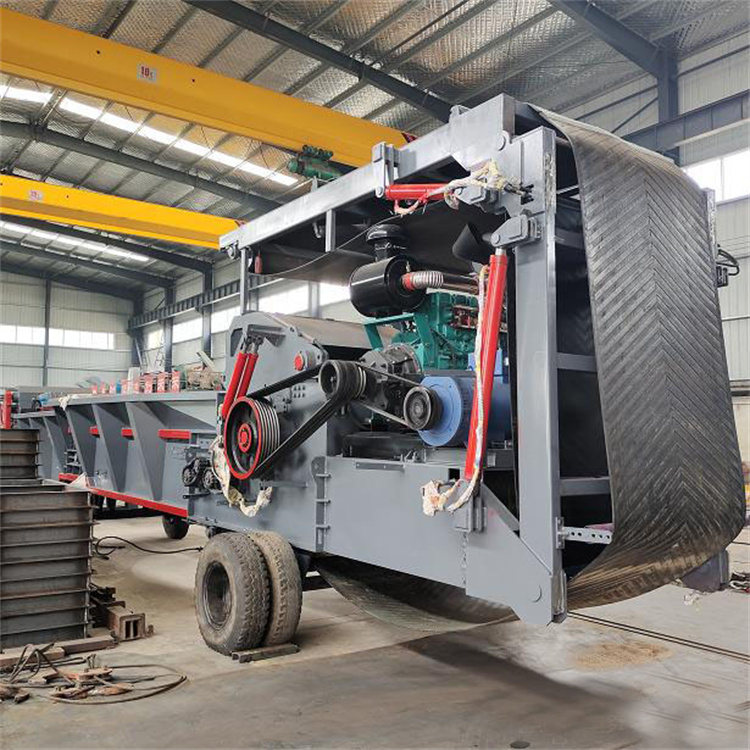
When buying a crusher, don’t start by staring at the power rating—seriously. In fact, put the spec sheet aside for a moment.
I’ve seen many procurement officers focus immediately on power ratings, price tags, and the impressive “maximum capacity” figures listed on the nameplate. But once the machine arrives on-site, the bottlenecks don’t happen at the crushing stage—they pile up at the pellet mill. A crusher doesn’t operate in a vacuum; it’s part of a chain that begins with raw material intake and continues through pelletizing, briquetting, or direct combustion. The ultimate yardstick for a successful equipment choice is whether the downstream process can actually utilize the output. Choose correctly, and your production line runs smoothly; choose poorly, and all that extra power just shifts the problem further down the line.
This article isn’t about spec sheets; it’s about the key considerations you need to address before making a purchase.
First, clarify: What kind of “crusher” does your biomass fuel plant actually need?
The term “wood crusher” is quite ambiguous in the current market.
A chipper uses blades to slice wood into 20–50 mm chips—suitable for boilers or pulp production. A crusher, by contrast, uses impact or compression to break down branches and wood scraps into 3–10 mm wood chips or sawdust. Pellet fuel production lines require the latter; the material must be fine enough to pass through the dies of a pellet mill—simply “making it smaller” isn’t enough.
Interestingly, these terms are often used interchangeably, which leads to suppliers quoting completely different types of machinery.
If your raw material consists of clean logs, large branches, or pallet scraps, a two-stage setup is standard: a chipper for coarse reduction, followed by a crusher for fine processing. However, if your feedstock consists of furniture manufacturing offcuts, bundled branches, or agricultural straw, it is more cost-effective to use a wood crusher equipped with a screen—typically a hammer mill or a hybrid machine combining blades and hammers. By simply swapping out the screen, you can adjust the fineness of the output—handling both coarse crushing and fine grinding in a single machine.
Before making a purchase, ask yourself one question: Do you need wood chips or wood shavings (sawdust)? Defining this first will set the direction for all subsequent technical specifications.
First consideration: The form of your raw material and its level of contamination—these are more important than the stated capacity figures.
Nominal capacity figures always come with caveats: they assume ideal material form, moderate moisture content, and a complete absence of metal, sand, or stone. In reality, raw materials are rarely that perfect.
Size and shape: Are you dealing with logs over 200 mm in diameter, irregular scraps from wooden pallets, or branched limbs? Hammer-mill type crushers handle branches and scraps (7–25 mm) quite well; however, for exceptionally long or thick logs, you should either cut them down first or add a wood chipper upstream.
Metal and impurities: Materials like discarded pallets, construction formwork, or demolition timber often contain nails, screws, sand, or stones. Blade-based chippers are highly vulnerable to metal—a single nail can chip or shatter the blades. Hammer-mill types are more robust, though their hammers and screens will still wear down rapidly. If your feedstock contains significant metal, install an iron remover upstream, or opt for a machine designed primarily for shearing and impact. When inquiring with manufacturers, ask directly: “What level of impurities can this machine tolerate?”
Moisture content is the most frequently underestimated factor. Most crushers can effectively process material with a moisture content between 30% and 50%. Beyond 50%—common with wet material, freshly felled timber, or wood collected during the rainy season—the material tends to clog the screens and stick to the hammers, hindering discharge. Wood chippers, by contrast, are largely indifferent to moisture levels; this is because they perform primary size reduction using blades and feature larger screen apertures, meaning moisture content has little impact on the cutting process. If the moisture content of your incoming material fluctuates significantly, you should select a crusher with a screen design resistant to clogging, and ideally, incorporate a drying or air-curing stage into your process.
Always clarify how the manufacturer defines “capacity.” The “hourly output” quoted by manufacturers is based on specific materials, specific screen aperture sizes, and specific moisture content. Don’t just focus on the maximum figure. In my view, the most reliable approach is to send 10–20 kg of your representative raw material to the supplier for a test run—or, alternatively, ask for performance data from other clients processing similar materials. Whether a figure is truly impressive depends on how it performs with your specific feedstock.
Second: The required output particle size must be determined by working backward from the downstream process.
Depending on the end product, the required fineness of the ground material can vary significantly.
For pellet fuel production, the material generally needs to be 3–5 mm in size to feed properly into a ring-die pellet mill, ensuring the resulting pellets have the necessary density and durability. For briquettes or manufactured charcoal, the particles can be slightly coarser, but the particle size distribution should still be tightly controlled.
Finer is not necessarily better. Grinding material too finely causes electricity consumption per ton to skyrocket, without necessarily improving pellet quality. Research suggests that a particle size range of 3–6 mm often yields the best balance in terms of pellet durability and combustion emissions. Grinding material into a fine powder is often just a waste of money.
The screen acts as the “ruler” for controlling fineness. On the same machine, changing to a screen with a different aperture size will alter the output; smaller apertures lead to lower capacity and higher energy consumption. When selecting equipment, verify two things: Can the manufacturer provide a screen that matches your target particle size? And how difficult is it to swap out the screen? Fuel production facilities frequently adjust fineness based on specific orders or recipes; a quick-change screen design can save a significant amount of time in actual operation.
Third: Capacity planning should be based on “normal peak” demand, not the “theoretical maximum” design capacity.
This principle sounds simple, yet it is frequently overlooked. Capacity requirements should be determined by the peak demand during a typical production week—do not base your investment calculations on the maximum capacity listed on the machine’s nameplate.
A machine with a nominal capacity of 2 tons per hour might actually reach that figure when processing dry, uniform material. However, if you switch to wet material, branched wood, or pallet waste containing impurities, it wouldn’t be surprising to see that output drop to 1.2–1.5 tons per hour. If a pelletizing line requires a stable throughput of 1.5 tons per hour, but is equipped with a machine nominally rated for only 2 tons, the crushing stage will inevitably become a recurring bottleneck.
There is a simple, effective rule of thumb for estimation: take the average monthly raw material processing volume from the past 3–6 months, multiply it by the projected growth for the next six months, and divide by the planned operating hours to determine the “required stable hourly throughput.” Then, add a 10–15% buffer. Never count on machinery running at its absolute limit every single day. Insufficient capacity costs you more than just lost output; pushing equipment to its limit often leads to skipped maintenance and accelerated wear—costs that will eventually catch up with you.
Point 4: Equipment Configuration—Single-Stage, Two-Stage, or Mobile
Once the raw material type and target particle size are defined, the appropriate equipment configuration becomes clear.
Single-stage crushing: For raw materials like offcuts, branches, or straw, with a target particle size of 3–10 mm, a hammer mill—or a combination knife-and-hammer mill—is usually sufficient. This approach offers lower investment costs and a streamlined process, making it the standard choice for many small-to-medium-scale fuel pellet plants.
Two-stage processing (chipping + crushing): If the raw materials consist of logs or large-diameter branches—or if you intend to supply both wood chips and pulverized material—a two-stage setup is better. A chipper handles coarse reduction, while a crusher performs fine grinding; this division of labor improves overall efficiency and ensures greater consistency in the final product.
Stationary vs. mobile: Stationary setups are ideal when raw materials are consolidated at a central plant for continuous production. If materials are scattered—such as in forests, orchards, or urban landscaping sites—mobile units (truck-mounted or towable) are more efficient by reducing transportation needs. However, for a given power rating, mobile units generally offer lower throughput than stationary counterparts, and their design can make maintenance more challenging. The key metric here is the total cost of material handling, not just the initial price tag of the equipment.
Point 5: Energy Consumption, Wear Parts, and Maintenance—The True Long-Term Costs
The purchase price is only the beginning. The frequency and cost of replacing components like hammers, screens, bearings, and drive parts constitute the bulk of the per-ton production cost.
Hammers are the most frequently replaced wear parts. With clean raw materials, a single set of components can last for thousands of hours; however, if the feed contains sand, stones, or metal—or if the material itself has a high silica content—the service life will plummet. Be sure to clarify these points before purchasing. Can the components be flipped and reused? Are they easy to replace? Are spare parts readily available? Consider the abrasiveness of your material when evaluating the screen; also, pay close attention to details like quick-change mechanisms and structural reinforcement. Proper bearing lubrication and rotor dynamic balancing are critical factors that determine whether the machine will vibrate excessively or suffer from frequent breakdowns during long-term operation. Cheaper machines often require frequent parts replacement and result in extended downtime—making them, in the long run, more expensive than more reliable models with a higher initial price tag.
Shift the focus from equipment selection to supplier selection.
Once you have addressed these five criteria, the next step is to find a supplier capable of handling these requirements. A vendor that does nothing more than send over a price quote is not a reliable partner. Henan Manto Machinery Equipment Co., Ltd. has spent 25 years specializing in wood-crushing and biomass processing equipment. Their portfolio spans drum chippers, wood-chip crushers, wood-flour production systems, and biomass pelletizing lines; they can configure individual machines or complete production lines based on your specific raw materials and output requirements. Their biomass crushing equipment is designed specifically for fuel preparation—for instance, their wood-chip crushers and multi-functional hammer mills offer a wide range of adjustable output particle sizes, allowing for easy screen selection to meet the specific needs of pelletizing or briquetting processes. If your project requires integrating crushing equipment into a full-scale pellet production line, you can use their biomass pelletizers and product catalog to ensure seamless process integration.
When choosing a wood crusher, do not simply chase the “most impressive” technical specifications. The machine must align with your specific raw materials, downstream processes, and internal maintenance capabilities. Clearly define your required particle size and actual production capacity, then ask the supplier to demonstrate the machine’s performance using your own raw materials. This approach is far more reliable than merely comparing figures on a price quote.