Skip to content
If you’ve ever looked at a pile of wood waste, agricultural residues, or forestry debris and wondered if there’s a better use for it than sending it to landfill, you’re not alone. Every year, millions of tons of biomass waste are generated globally—and increasingly, that waste is being transformed into renewable energy. But the key to unlocking that potential lies in one critical factor: the right biomass processing equipment.
I’ve spent years helping businesses across the world make the transition from waste disposal to energy production. The story is always the same: they start with mountains of sawdust, branches, rice husks, or palm shells, and they end up with a profitable, sustainable energy operation. In this guide, I’ll walk you through the essential equipment, the market trends, and how to choose the right machinery for your renewable energy project.
Why Biomass Processing Equipment Matters for Renewable Energy
The global shift toward renewable energy has created unprecedented demand for biomass as a fuel source. Governments and organizations worldwide are promoting renewable energy initiatives, and the numbers tell a compelling story. The global biomass crushing device market was valued at $982.36 million in 2025** and is projected to grow to **$1.46 billion by 2032. The biomass pellet making machine market is expected to grow at 7.0% CAGR, potentially reaching $8 billion by 2033.
But raw biomass in its natural state—logs, branches, straw, or husks—isn’t ready for energy production. It needs to be processed. That’s where biomass processing equipment comes in. These machines convert heterogeneous organic feedstocks into uniform, high-energy-density materials suitable for combustion, gasification, pelleting, and other renewable energy applications.
Essential Biomass Processing Equipment Types
Depending on your feedstock and end-use application, you’ll need different types of equipment. Here’s a breakdown of the essential machines.
Wood Chippers
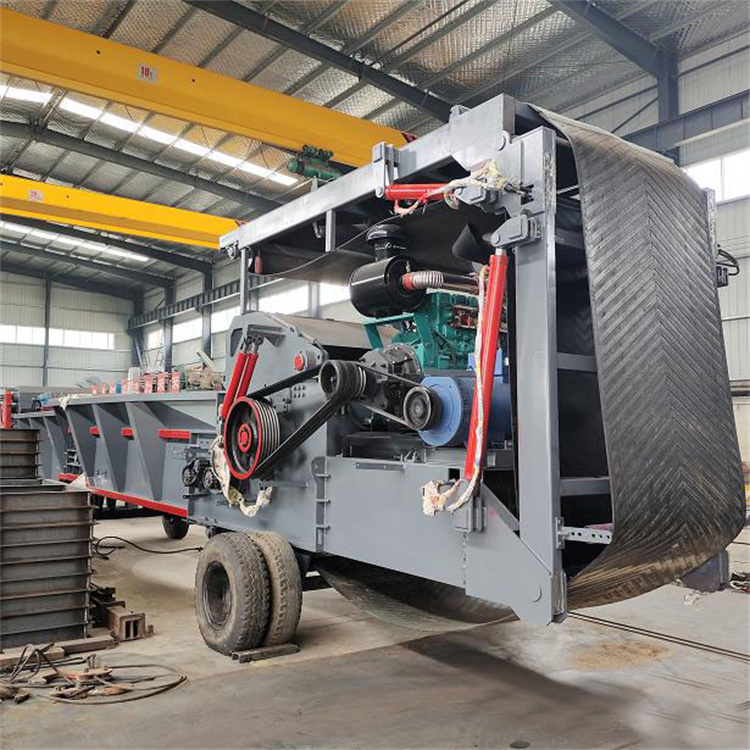
A wood chipper is often the first step in a biomass processing line. It takes logs, branches, and whole trees and reduces them to smaller chips—typically 30–50 mm in size. Wood chippers play a critical role in biomass energy production, landscaping, and pulp and paper applications.
For remote operations without reliable electricity, a diesel disc wood crusher offers mobility and flexibility. It can be transported directly to logging sites or rural areas, reducing the need to haul raw wood over long distances.
Hammer Mills
A hammer mill takes size reduction a step further. It uses high-speed rotating hammers to pulverize material into fine, consistent particles. Hammer mills are the workhorse of the biomass processing industry—they can handle wood chips, sawdust, agricultural residues, and even fibrous biomass. Knife mills are generally best suited for particle size reduction; they are about 25% more energy-efficient than hammer mills and can produce finer particle sizes suitable for biofuel production.
For pellet production, a hammer mill typically produces particles in the 1–5 mm range—the sweet spot for most pellet mills.
Biomass Dryers
Moisture content is one of the most critical factors in biomass processing. Wet biomass (above 15% moisture) wastes energy during combustion or carbonization and produces poor-quality output. Rotary drum dryers are a common solution for larger woody biomass material such as wood chips. They reduce moisture to the ideal range of 8–12%, ensuring efficient downstream processing.
Pellet Mills
A biomass pellet mill compresses dried, ground biomass into dense pellets. These pellets serve as a renewable energy source, offering an eco-friendly alternative to fossil fuels for heating and electricity generation. Ring die pellet mills are typically used for large-scale commercial production, while flat die pellet mills are more common for smaller operations.
ANDRITZ, a global leader in biomass pelleting, produces more than 50% of all biofuel pellets produced worldwide. Direct drive pellet mill technology delivers energy savings of approximately 20% while extending die life and simplifying maintenance.
Carbonization Systems
For producers targeting biochar or activated carbon markets, a biomass carbonization machine is essential. These systems use pyrolysis—thermal decomposition in an oxygen-limited environment—to convert biomass into carbon-rich charcoal. The global market for biomass carbonization machines was estimated at $124 million in 2025** and is projected to reach **$213 million by 2032, growing at an 8.2% CAGR.
A continuous carbonization furnace can run 24/7, with syngas recycling cutting external fuel costs by 30–50%. This closed-loop design makes the process cleaner and more profitable.
How to Choose the Right Biomass Processing Equipment
Selecting the right equipment for your renewable energy project depends on several factors.
Feedstock Type
Different biomass materials behave differently during processing. Hardwood requires more power than softwood. Agricultural residues like straw and rice husks have different fiber structures than woody biomass. Coconut shells and palm shells are dense and abrasive. A comprehensive wood crusher from Henan Manto Machinery, for example, can process logs up to 40 cm in diameter, branches, bamboo, straw, sawmill offcuts, and wooden pallets, making it suitable for a wide range of feedstocks.
End-Use Application
Are you producing wood chips for biomass boilers? Sawdust for pellet production? Biochar for soil amendment? Each application requires different particle sizes and processing steps. For biomass combustion, chips in the 30–50 mm range are typical. For pellet production, you need particles under 5 mm. For biochar, you need uniform carbonized material with consistent properties.
Capacity and Throughput
How much material do you need to process per hour? Machines range from small units processing a few hundred kilograms per hour to industrial models handling 5 tons per hour or more. Henan Manto Machinery’s water drop hammer mill, for example, offers production capacities ranging from 2 to 12 tons per hour with power options from 55 to 160 kW.
Power Source
Electric-powered equipment is suited for stationary production lines where reliable power is available. Diesel-powered equipment is ideal for outdoor operations, remote forestry sites, and areas with unreliable electricity. The proliferation of electric and hybrid power systems is one of the prime reasons driving the global wood chipper machines market growth.
The Role of Automation and Smart Technology
Modern biomass processing equipment is increasingly incorporating automation and smart technology. Smart control systems, condition monitoring, and predictive maintenance packages are reducing unplanned downtime and optimizing energy use per ton processed. Integration of AI and autonomous feed systems is creating sizable demand in the market.
For global buyers managing remote operations, remote diagnostics can be a game-changer. Manufacturers are responding with modular designs, improved wear materials, and control systems that tighten particle-size distribution while reducing downtime.
Environmental and Economic Benefits
Investing in biomass processing equipment for renewable energy delivers both environmental and economic benefits.
Carbon Reduction
Biomass is considered carbon-neutral because the CO₂ released during combustion is roughly equivalent to the CO₂ absorbed during the plant’s growth. Biochar production goes further—it sequesters carbon for centuries, generating tradable carbon credits under frameworks like the European Biochar Certificate (EBC) and Puro.earth.
Waste Diversion
Every ton of biomass processed is a ton diverted from landfill. Agricultural and forestry waste that would otherwise be burned or left to rot becomes a valuable energy feedstock.
Revenue Generation
Processed biomass—whether chips, pellets, or biochar—commands real value in the market. Wood chips sell for biomass boilers, pellets for residential and industrial heating, and biochar for agriculture and carbon credits.
Real-World Success Story
A furniture manufacturer in Southeast Asia was paying to haul away 15 tons of sawdust and offcuts every month. After installing a complete biomass processing line—including a wood chipper, hammer mill, dryer, and pellet mill—they now produce high-quality wood pellets for export. Their disposal cost disappeared, and their monthly revenue from pellet sales covers more than half of their electricity bill. The equipment paid for itself in under a year.
Conclusion
Biomass processing equipment for renewable energy is one of the smartest investments you can make in the transition to a sustainable energy future. Whether you’re a sawmill owner drowning in sawdust, a farmer with mountains of agricultural residues, or an entrepreneur looking to enter the bioenergy market, the right equipment can transform your waste into a valuable renewable energy resource.
Henan Manto Machinery Equipment Co., Ltd. has been helping businesses across the world make this transition. Their equipment is engineered for heavy continuous use, backed by spare parts support, and priced to deliver a solid return on investment. From wood chippers and hammer mills to comprehensive wood crushers and pellet mills , they have the experience to guide you toward the right solution.
Take the time to assess your feedstock, your production goals, and your budget. Test the equipment with your actual material. And choose a supplier that will support you long after the first shipment arrives. The renewable energy market is growing rapidly—and your biomass waste is worth more than you think.