Skip to content
Introduction
The global demand for clean renewable biomass fuel continues to surge as factories, heating facilities, and power plants phase out fossil coal and oil. High-quality biomass pellets and solid briquettes rely entirely on standardized pre-processing grinding stages—without properly sized, uniform raw particles, pellet dies block, briquette density drops, and overall plant energy costs spike. Most new plant investors struggle to match the right grinding equipment to their raw materials, production capacity, and final fuel standards, which directly cuts long-term profit margins. This guide breaks down every core biomass grinding machine in a complete production flow, explains their working logic, and shares customized system solutions manufactured by Henan Manto Machinery Equipment Co., Ltd., a 25-year professional wood and biomass processing machinery supplier with global client projects spanning Southeast Asia, Africa, Europe, and North Americamantomachi….
Raw feedstock for pellet and briquette manufacturing covers two broad categories: forest waste (whole logs, thick branches, bark, wood slabs, sawmill scraps) and agricultural residues (corn stalks, rice husks, coconut shells, straw, palm fronds). Each material requires tiered size reduction: primary coarse chipping, secondary medium crushing, and tertiary fine grinding or ultrafine pulverization. Skipping any grinding stage leads to inconsistent particle distribution, weak pellet bonding, high wear on pellet machine rollers, and frequent production downtime. For small-scale family workshops, medium commercial factories, and large industrial biomass fuel plants, the equipment configuration varies dramatically, and selecting one-stop matched grinding units eliminates the risk of mismatched machine throughput between upstream and downstream processes.
1. Primary Coarse Grinding: Drum Chipper for Large Raw Logs & Thick Branches
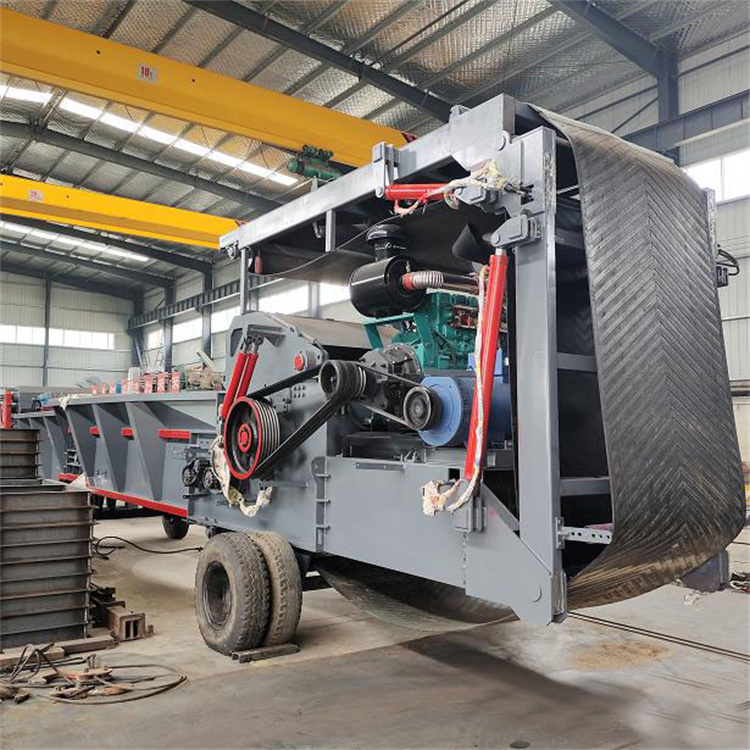
The first grinding step in all full biomass pellet lines targets oversized bulk feedstock that cannot directly enter secondary crushers. The drum chipper acts as the front-end primary crushing equipment, engineered to cut whole logs, thick tree trunks, and large irregular wood waste into uniform 20–30mm wood chips at high hourly throughput ranging from 3t/h to 20t/h. Unlike disc chippers, drum-type chippers feature heavy rotating cutter drums with reinforced alloy blades, self-feeding roller structures, and wide feeding inlets that easily handle crooked, wet, and tangled branches without frequent jamming. Mobile drum chipper models support on-site forest waste processing, eliminating expensive raw material transportation costs for logging operations.
Henan Manto Machinery manufactures fixed and mobile drum chipper series with customizable feeding conveyor systems and magnetic metal separators installed at feed ports to filter nails, iron wires, and metal debris mixed in waste wood—this critical accessory prevents blade damage and avoids combustion sparks inside subsequent grinding chambers, greatly improving plant operation safety. Clients running large biomass briquette production lines with 10+ ton hourly output universally pair drum chippers as the first grinding station, turning unmanageable large timber into standardized chips ready for secondary fine crushing. Without this primary grinding step, medium-sized wood chip crushers face constant overload, lower service life, and uneven discharge particles unsuitable for high-density pellet compression.
Key long-tail search keywords covered here: high capacity drum chipper for biomass pellet raw material, mobile wood drum chipper for forest waste pre-processing, heavy-duty log chipper machine for briquette production lines.
2. Secondary Medium Grinding: Wood Chip Crusher for Standard Sawdust Output
After coarse chipping, wood chips enter the second grinding stage via wood chip crushers, also widely called biomass hammer mills in global industrial markets. This machine reduces 20–30mm chips into 2–8mm fine sawdust, the most common particle size standard for medium-density biomass pellets and regular briquettes. The internal teardrop-shaped grinding chamber optimizes airflow circulation to produce evenly sized sawdust with minimal oversized fragments, while replaceable perforated screens allow operators to adjust discharge particle thickness by swapping screen meshes based on final fuel requirements.
For farms and small workshops processing straw, rice husks, and thin branches without large log inputs, standalone wood chip crushers can operate as the sole grinding device, skipping the drum chipper entirely to lower initial investment. Medium-scale factories combining forest and agricultural waste use a two-stage grinding flow: drum chipper + wood chip crusher to balance processing speed and particle uniformity. All wood chip crusher models from Henan Manto Machinery Equipment Co., Ltd. integrate pulse dust removal interfaces to connect external cyclone dust collectors, solving severe wood dust pollution during continuous grinding and complying with international environmental emission standards for biomass processing plants.
This mid-tier grinding equipment addresses frequent buyer search queries: industrial wood chip crusher for sawdust pellet making, multifunctional hammer mill for agricultural residue briquette raw material, low-noise biomass sawdust grinding machine for small production lines.
3. Tertiary Fine Grinding: Wood Powder Machine for Ultra-Dense Premium Pellets & Briquettes
High-end premium biomass fuel markets (industrial boiler pellets, barbecue charcoal briquettes, export-grade wood fuel pellets) demand ultrafine wood flour below 1mm, which requires tertiary grinding using dedicated wood powder machines. This equipment further pulverizes standard sawdust from wood chip crushers into micron-level wood powder with consistent fibrous texture; the fine particles contain exposed natural lignin that acts as a natural binder during high-pressure compression, removing the need for chemical adhesives and boosting pellet compressive strength, waterproof performance, and combustion efficiency.
Vertical structure wood powder grinding machines reduce plant floor space occupation by 30% compared to horizontal pulverizers, with automatic material circulation systems that reprocess unqualified coarse particles until reaching target fineness. Factories producing high-value export biomass pellets prioritize installing wood powder machines as the final grinding stage before drying and pelletizing sections. The complete wood flour solution package launched by Henan Manto Machinery includes matched feeding conveyors, dust collectors, and storage silos, forming an integrated fine grinding system with fully automatic feeding and discharging to cut manual labor costs by over 40% for continuous 24-hour production.
Long-tail SEO keywords embedded: ultra-fine wood powder machine for premium biomass pellets, vertical wood flour grinder for high-density briquette production, micron-level biomass pulverizer for export fuel manufacturing.
4. Matching Grinding Equipment to Different Scale Pellet & Briquette Lines
Selecting biomass grinding machinery depends on three core factors: raw material type, target hourly output, and final fuel quality standards. We divide production plants into three scales with recommended grinding configurations supported by Manto’s global engineering project cases:
Small-Scale (100–800kg/h output: farms, family workshops)
Raw materials: thin branches, straw, rice husks, sawmill leftover sawdust
Grinding configuration: Single wood chip crusher (no drum chipper, optional small wood powder machine for premium pellets)
Advantages: Low equipment investment, easy manual operation, compact footprint, low power consumption
Medium-Scale (1–5t/h output: commercial biomass fuel factories)
Raw materials: Mixed logs, branches, corn stalks, coconut shells
Grinding configuration: Drum chipper + wood chip crusher (add wood powder machine for export-grade pellets)
Advantages: Balanced throughput and particle uniformity, automatic conveyor feeding, stable continuous operation
Large Industrial (6–20t/h output: power plant fuel suppliers, large briquette factories)
Raw materials: Whole tree trunks, forestry bulk waste, mixed agricultural residues
Grinding configuration: Heavy-duty mobile/fixed drum chipper + multi-set wood chip crushers + industrial wood powder machine + centralized dust removal system
Advantages: 24-hour non-stop mass production, fully automated pipeline transport, centralized control cabinet for all grinding units
Every complete biomass pellet or briquette production line sold by Henan Manto Machinery includes free professional layout design for grinding workshops, matching conveyor pipe sizes between each grinding machine, and post-installation operator training to eliminate throughput mismatches between chipping, crushing, pulverizing, and pelletizing sections. Many new plant investors mistakenly purchase grinding machines from separate suppliers, leading to bottlenecks where upstream grinding output far exceeds downstream pellet machine capacity, wasting electricity and labor resources every production shift. One-stop supporting grinding equipment from a single manufacturer resolves this coordination flaw entirely.
5. Critical Maintenance Tips to Extend Biomass Grinding Equipment Lifespan
Grinding machinery bears the highest wear in biomass production lines due to continuous impact friction with hard wood fibers and occasional mineral impurities. Following standardized maintenance procedures directly cuts long-term replacement costs for blades, hammers, and screens:
- Clean metal separators on drum chippers and wood chip crushers daily to avoid metal abrasion damage to alloy cutting parts;
- Replace worn hammer blades of wood chip crushers every 300–500 working hours, using original wear-resistant spare parts supplied by equipment manufacturers;
- Clear dust blockages inside wood powder machine circulation ducts every week to maintain grinding efficiency and prevent overheating shutdowns;
- Lubricate all bearing components of drum chipper drive rollers and grinder rotors with high-temperature grease biweekly;
- Shut down grinding equipment fully before switching raw materials to avoid mixed particle sizes contaminating finished pellets and briquettes.
All grinding equipment from Henan Manto Machinery comes with a 12-month full machine warranty and global spare parts delivery service, with local after-sales teams stationed in major biomass-consuming regions to provide on-site maintenance guidance within 48 hours after receiving client service requests. This comprehensive after-sales system reduces unexpected production halts caused by damaged grinding parts, a key competitive advantage compared to generic machinery traders without factory technical support.
Conclusion
Biomass grinding equipment forms the foundational core of all stable pellet and briquette production lines, with tiered drum chippers, wood chip crushers, and wood powder machines working in sequence to deliver the uniform particle size required for high-quality renewable fuel. Whether investors operate small farm-scale workshops or large industrial biomass fuel plants, matching the correct combination of grinding units to raw material and output goals directly determines production efficiency, finished fuel quality, and overall operational profitability.
As a 25-year specialized manufacturer of full-range wood and biomass processing equipment, Henan Manto Machinery Equipment Co., Ltd. supplies customized grinding system solutions paired with complete biomass pellet and briquette production lines, covering every pre-processing stage from large log chipping to ultrafine wood flour pulverization. Clients worldwide rely on our durable, energy-saving grinding machinery to turn low-value forest and agricultural waste into profitable clean biomass fuel. For tailored equipment configuration drawings, technical parameter sheets, and factory test video resources of biomass grinding equipment for pellet and briquette production, contact our professional engineering team via the official website anytime to get free one-on-one project consultation.