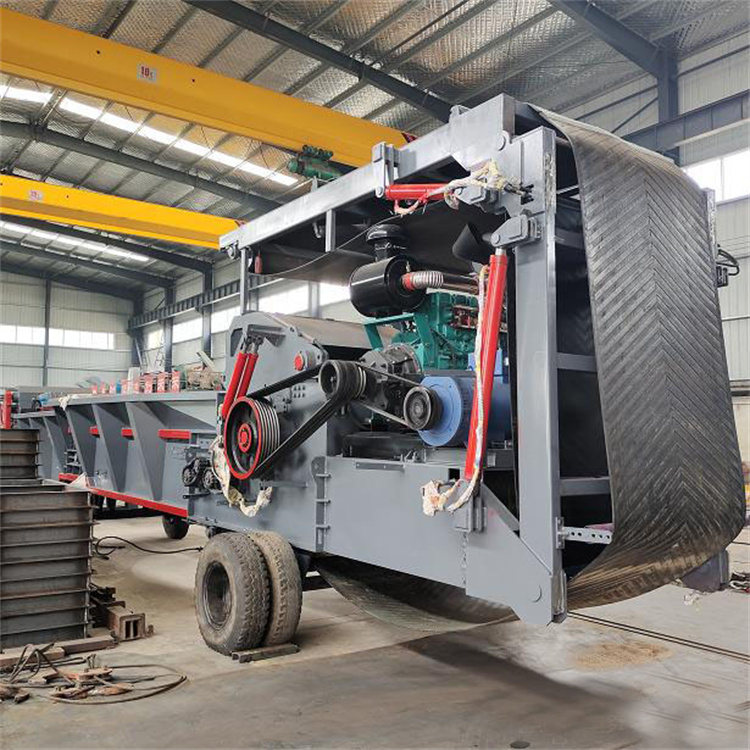
“Best” is a slippery word in equipment. The machine that suits a municipal crew clearing storm debris is rarely the one a landscape contractor needs for weekly hedge and branch cleanup. The real question is not which single machine wins on paper, but which machine matches the material you handle and the product you intend to sell or use. This guide works through the main categories of tree branch recycling equipment, explains what each does well, and shows how to match the machine to your output.
Start with the Output, Not the Machine
The most useful way to narrow the field is to decide what you want branches to become. Tree branches can follow three broad recycling pathways, and each pathway points toward a different equipment category.
Pathway 1: Mulch and landscape chips. Branches are reduced to a decorative or functional ground cover. Appearance and consistent chip size matter most. A wood chipper is the natural starting point.
Pathway 2: Biomass feedstock. Branches become fuel for boilers, pellet mills, or briquetting lines. Particle size must be consistent enough to pass through a die or feed system without causing blockages. This pathway may require a wood crusher or hammer mill after primary reduction.
Pathway 3: Compost bulking agent or soil amendment. Branches are reduced to a coarse, carbon-rich material that balances nitrogen-heavy green waste in compost piles. A shredder or coarse grinder is usually sufficient, and fine sizing is not the priority.
Once the output is clear, the equipment decision becomes much narrower.
Wood Chippers: The Default for Clean Branches
A wood chipper uses sharp knives mounted on a rotating disc or drum to slice branches and small logs into relatively uniform chips. For clean, whole branches—the kind that arrive from routine pruning, orchard maintenance, or tree service work—a chipper is the most efficient first-stage machine.
Chippers excel when the feedstock is straight, clean, and reasonably sized. They produce chips with clean cuts and consistent geometry, which makes them suitable for landscape mulch, pulp and paper furnish, and boiler fuel. They are less tolerant of dirt, grit, and irregular short pieces: contaminated wood dulls knives quickly, and irregular debris feeds poorly.
For branch recycling specifically, the practical capacity range runs from small towable units that handle limbs up to a few centimeters in diameter, to industrial disc or drum chippers that process branches and small logs at several tons per hour. A branch shredder designed for orchard and landscaping trimmings typically handles branches under 18 cm in diameter and produces chips in the 10–30 mm range, at capacities of roughly 1–4 tons per hour. Larger disc chippers extend that diameter range and throughput for operations feeding a biomass or pulp market.
If the goal is simply to turn branches into a saleable or usable chip with minimal fuss, a chipper is often the first machine to evaluate.
Wood Crushers and Hammer Mills: When Chips Are Not the Endpoint
A chipper makes chips. A crusher and a hammer mill make smaller, more refined material. If the recycled branches are destined for pellet production, animal bedding, or a boiler feed system with strict particle-size requirements, a second reduction step is usually necessary.
A wood crusher combines cutting and hammer impact, then forces material through a screen that sets the final particle size. This makes it a refinement machine: it takes pre-reduced material and brings it down to a consistent specification. A multi-function wood crusher can process branches, bark, and offcuts into particles adjustable from roughly 2 mm to 20 mm, with capacities spanning from 0.5 to 5 tons per hour depending on the model. For operations that receive a mix of branch sizes and need a single machine that can handle both primary reduction and refinement, a combination crusher is a practical compromise.
A teardrop-style hammer mill goes finer still. Using a shaped grinding chamber that generates turbulent airflow, it reduces chips and branches to uniform particles in the 1–5 mm range, with low noise and minimal dust. This is the specification that pellet mills and composite material producers require, and it is the stage where branch recycling becomes biomass feedstock rather than landscape product.
The key decision point is whether your buyer or your downstream process specifies a chip or a particle size. If it specifies chips, a chipper is the primary machine. If it specifies millimeters, a crusher or hammer mill is required after chipping.
Matching Machine to Feedstock Condition
Beyond output, the condition of the incoming branches determines how well a machine will perform in daily use.
Clean, straight branches feed reliably into chippers and produce uniform chips with predictable knife wear.
Irregular, short, or mixed branch waste—including trimmings that contain leaves, small forks, and dirt—feeds unevenly into a chipper and accelerates knife dulling. A shredder or crusher with a more tolerant intake and blunt or hammer-based action handles this material more steadily.
Wet or green branches can bridge in a chipper feed chute and produce stringy chips. A hammer mill or crusher with a screen may handle higher moisture more gracefully, though very wet material can still blind a screen.
The practical rule is straightforward: if the branches can be presented to the machine in an aligned, whole form, a chipper is efficient. If the material arrives as a jumble of short, irregular, or contaminated pieces, a crusher or shredder will be more productive and less maintenance-intensive.
Building a Branch Recycling Line
For professional operations handling a range of branch sizes and end products, a single machine is rarely the whole answer. A two-stage line is common: a chipper performs the primary reduction of whole branches into manageable chips, and a crusher or hammer mill refines those chips to the particle size required by the end user.
This staged approach avoids forcing one machine to do incompatible jobs. The chipper is not asked to produce fine particles it was never designed for, and the crusher is not fed whole branches that would jam its intake or wear its components prematurely. The result is steadier throughput, more predictable maintenance, and a final product that meets specification.
Henan Manto Machinery Equipment Co., Ltd. manufactures equipment across this full chain, from primary chipping to fine grinding. Their branch shredder and disc chipper line covers branch and log reduction at capacities from roughly 1 to 14 tons per hour, while their multi-function wood crusher handles mixed branch waste with adjustable output, and their teardrop hammer mill delivers the 1–5 mm particle size required for pellet and briquette production. For operators who need to understand the boundary between chipping and crushing before specifying equipment, Manto’s chipper versus crusher comparison provides a practical framework based on feedstock and output.
A Practical Selection Checklist
Use the following sequence to narrow the choice before requesting quotes or comparing specifications.
1. Define the final product in measurable terms. “Mulch” is not a specification. “Chips between 10 and 30 mm” is. “Biomass feedstock” is not a specification. “Particles under 5 mm” is. The output number determines the machine category more reliably than any brochure claim.
2. Characterize the branches you actually receive. Diameter range, straightness, moisture content, and contamination level all matter more than the maximum diameter a machine can theoretically accept. A machine rated for 18 cm branches will perform very differently on clean orchard prunings versus dirty storm debris.
3. Decide whether one stage or two is needed. If chips are the product, a chipper may be sufficient. If fine particles are the product, plan for a crusher or hammer mill after primary reduction.
4. Match capacity to normal peak weeks, not brochure maximums. Undersizing a machine to save on purchase price usually produces higher operating costs through downtime, jam clearing, and accelerated wear.
5. Confirm the maintenance profile you can support. Chippers require regular knife sharpening or replacement. Crushers and hammer mills use hammers and screens, which wear differently and demand a different maintenance routine. Choose the machine whose maintenance schedule fits your crew and your season.
The Bottom Line
The best machine for tree branch recycling is not a single model or category. It is the machine—or the combination of machines—that matches your branches to your intended output. A chipper is the efficient first choice for clean branches destined for chips and mulch. A crusher or hammer mill is the necessary refinement step when the end product is biomass feedstock or a specified fine particle. A two-stage line is the practical answer for operations that handle both clean branches and irregular residue, or that serve more than one end market.
Henan Manto Machinery supplies equipment across these categories and works with operators to match machine configuration to feedstock and output. Starting from the product specification, rather than from a machine’s headline capacity, is the most reliable way to build a branch recycling setup that performs consistently season after season.