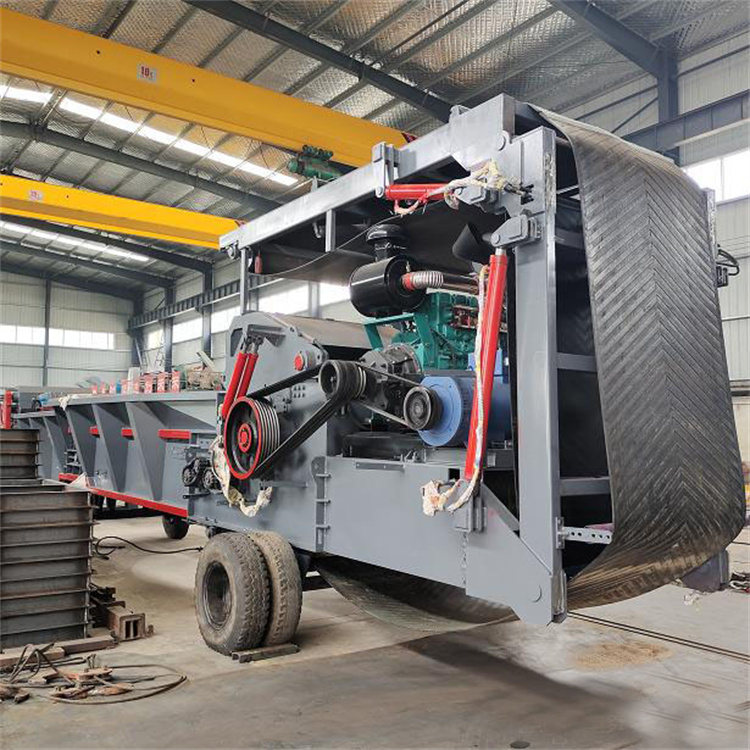
Handling large branches, limbs, and oversized wood waste is one of the most demanding tasks in forestry, land clearing, tree care, and biomass operations. Standard consumer chippers quickly reach their limits when faced with thick, hardwood, or irregular material. The right industrial wood chipper transforms bulky debris into uniform chips that can be used for biomass fuel, mulch, pulp, or further processing—while dramatically reducing labor, transport volume, and disposal costs.
Choosing the best industrial wood chipper for large branches requires understanding the two dominant designs: drum chippers and disc chippers. Each has strengths depending on material type, volume, and end-use requirements.
Drum Chippers: High-Throughput Power for Mixed Large Branches
A drum wood chipper uses a heavy rotating drum fitted with sharp knives. As material enters the feed opening, the drum’s mass and momentum aggressively pull branches and logs into the cutting zone. This self-feeding action makes drum chippers especially effective for high-volume processing of mixed limbs, crooked branches, and brushy material.
Industrial drum models commonly handle feed diameters from 200 mm up to 300–400 mm or more, with capacities ranging from 5 to 40 tons per hour depending on power and configuration. They excel in continuous operation and tolerate wet or green wood better than many alternatives. For operators processing large volumes of branches daily—such as commercial tree services, land-clearing crews, or biomass feedstock preparation—a heavy-duty drum chipper is often the most productive choice.
Many modern units are available in electric or diesel versions. Diesel-powered mobile drum chippers are particularly valuable for remote forestry sites where electricity is unavailable, allowing on-site size reduction and eliminating the need to haul unchipped material long distances.
Disc Chippers: Precision and Capacity for Thick Hardwood
Disc-type machines use a large rotating disc with knives mounted on the face. They generally offer more controlled feeding and can handle larger-diameter clean logs and straight branches with excellent chip quality. Industrial disc wood chippers frequently process material up to 380 mm in diameter and are favored when uniform chip size is critical for pulp, paper, or certain biomass applications.
While disc chippers may have slightly lower throughput on highly branched or tangled material compared with equivalent drum units, they deliver cleaner cuts and are often preferred for high-value hardwood processing. Many operators use both types: a drum chipper for mixed branch work and a disc machine for premium logs.
Key Features That Define the Best Industrial Wood Chippers for Large Branches
When evaluating machines for thick branches, focus on these critical specifications:
- Feed opening and maximum diameter – Look for openings that comfortably accept the largest material you regularly process. Undersizing forces operators to pre-cut branches, destroying productivity.
- Power and torque – Industrial units range from 55 kW electric motors to diesel engines exceeding 300 HP. High torque is essential for dense hardwood and continuous heavy loads.
- Chip size control – Adjustable screens or knife settings allow operators to produce chips from 20–80 mm (or finer), matching downstream needs such as biomass boilers or further grinding.
- Build quality and wear parts – Heavy steel construction, replaceable knives, anvils, and bearings determine long-term reliability and operating cost.
- Safety and automation – Hydraulic or powered feed systems, emergency stops, and overload protection reduce labor intensity and improve safety.
- Mobility options – Towable or self-propelled diesel models enable on-site processing, a major advantage for large-branch clearing projects.
A well-matched industrial wood chipper for large branches can reduce material volume by 70–80 percent, turning what was once a disposal problem into a marketable product or low-cost boiler fuel.
Applications and Economic Benefits
Industrial branch chippers serve multiple sectors:
- Forestry and logging operations converting residues into biomass feedstock
- Commercial tree care and storm cleanup crews needing rapid volume reduction
- Sawmills and wood processors turning slabs, offcuts, and large branches into uniform chips
- Land-clearing and construction projects managing vegetation waste
- Biomass energy plants preparing consistent fuel for boilers or gasifiers
By investing in a high-capacity machine, operators lower transport costs, reduce landfill fees, create additional revenue streams from chips or mulch, and support sustainability goals. Consistent chip quality also improves downstream processes such as pelletizing or composting.
How to Select the Right Machine
Start by defining your typical material: maximum branch diameter, hardwood vs. softwood, moisture content, and daily volume. Then match capacity and power accordingly. Consider whether stationary electric or mobile diesel better suits your sites. Evaluate total cost of ownership—including knife life, fuel or electricity consumption, and spare-parts availability—rather than purchase price alone.
Reliable manufacturers provide material testing, capacity recommendations, and after-sales support. Henan Manto Machinery Equipment Co., Ltd. has more than 25 years of experience supplying industrial wood processing equipment to customers worldwide. Their range includes high-throughput drum chippers, versatile disc models, and comprehensive wood crushers designed for demanding large-branch applications.
Operators seeking a complete solution can also explore the full wood chippers product line, which covers both drum-type and disc-type machines in electric and diesel configurations. For the most demanding logs and mixed waste, a comprehensive wood crusher offers expanded capacity and flexibility.
Conclusion
The best industrial wood chipper for large branches is the one that matches your specific material, volume, and site conditions while delivering reliable, high-throughput performance. Drum chippers dominate high-volume mixed-branch work with aggressive self-feeding, while disc chippers excel at producing uniform chips from thicker, cleaner material. Prioritize robust construction, adequate power, adjustable chip size, and strong manufacturer support.
Henan Manto Machinery provides proven industrial solutions that help businesses convert large branches and wood waste into valuable resources efficiently and economically. Selecting the right machine from an experienced supplier such as Henan Manto Machinery ensures long-term productivity, lower operating costs, and a clear path from bulky waste to usable product. With the correct industrial wood chipper in place, large-branch processing shifts from a costly chore to a streamlined, profitable operation.