Introduction: The Billion-Dollar Question
If you’re standing in a yard piled high with wood waste—branches, pallets, offcuts, and forestry debris—you’ve probably asked yourself the same question that keeps biomass producers up at night: Are industrial wood grinding machines the key to profitable biomass fuel production?
The short answer is yes. But the long answer—the one that determines whether your operation turns a profit or burns through capital—is far more nuanced. Choosing the right industrial wood grinding machines for your specific feedstock and production goals can mean the difference between a thriving biomass fuel business and an expensive equipment mistake.
What Exactly Are Industrial Wood Grinding Machines?
Before we dive into selection criteria, let’s clarify what we’re talking about. Industrial wood grinding machines encompass a family of size-reduction equipment designed to transform raw wood waste into uniform particles suitable for biomass fuel production. These machines range from primary crushers that handle whole logs to fine grinders that produce wood flour for pellet binding.
The global demand for clean renewable biomass fuel continues to surge as factories, heating facilities, and power plants phase out fossil coal and oil. High-quality biomass pellets and solid briquettes rely entirely on standardized pre-processing grinding stages—without properly sized, uniform raw particles, pellet dies block, briquette density drops, and overall plant energy costs spike.
The Three Stages of Biomass Grinding
Understanding the grinding process is essential before investing in equipment. Most biomass fuel production lines require three distinct grinding stages:
1. Primary Coarse Grinding: Drum Chippers
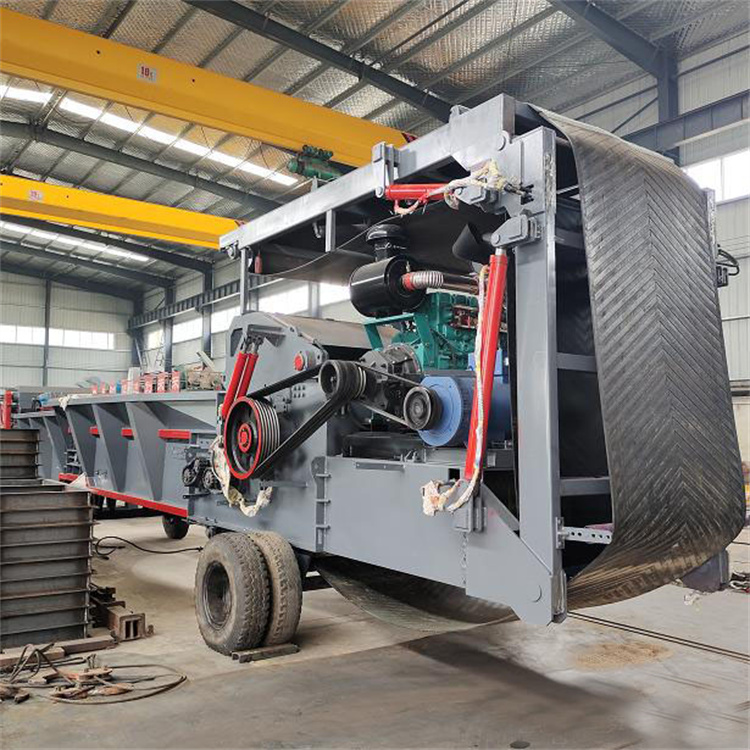
The first grinding step targets oversized bulk feedstock that cannot directly enter secondary crushers. The drum chipper acts as the front-end primary crushing equipment, engineered to cut whole logs, thick tree trunks, and large irregular wood waste into uniform 20–30mm wood chips at high hourly throughput ranging from 3t/h to 20t/h.
Unlike disc chippers, drum-type chippers feature heavy rotating cutter drums with reinforced alloy blades, self-feeding roller structures, and wide feeding inlets that easily handle crooked, wet, and tangled branches without frequent jamming. Mobile drum chipper models support on-site forest waste processing, eliminating expensive raw material transportation costs for logging operations.
2. Secondary Medium Crushing: Wood Chip Crushers
Once your raw material has been reduced to uniform chips, the next stage involves further size reduction. A wood chip crusher (also called a wood shredder) uses a rotating drum or disc with fixed blades to slice and break wood into larger, uniform chips or coarse flakes. The cutting action is cleaner, producing less dust and lower heat compared to impact-based grinding.
Wood crushers produce output sizes ranging from 5 to 50 mm (adjustable by screen or knife gap) and can handle moisture content up to 40%—even green wood. This makes them ideal for processing freshly cut logs and wet agricultural residues.
3. Tertiary Fine Grinding: Hammer Mills and Wood Powder Machines
For applications requiring fine particles—such as pellet manufacturing, briquette production, and charcoal making—you’ll need a hammer mill or wood powder machine.
Hammer mills use high-speed rotating hammers to crush, shred, or pulverize material until it passes through a perforated screen. They produce output sizes from 0.5 to 10 mm (screen-controlled) and are ideal for producing wood flour for pellet binding or animal feed.
For even finer applications, vertical wood powder machines process wood chips, sawdust, branches, bamboo, and agricultural residues into powder ranging from 60 to 325 mesh. These machines are essential for producing incense products, wood-plastic composites, and paper manufacturing.
Wood Crusher vs Wood Grinder: Which One Do You Need?
One of the most common questions in biomass processing is: wood crusher vs wood grinder—which one is right for me? The two machines look similar to the untrained eye, but they perform very different jobs.
Key Differences at a Glance
| Feature | Wood Crusher | Wood Grinder (Hammer Mill) |
|---|---|---|
| Mechanism | Cutting and slicing with fixed knives | Impact and shearing with free-swinging hammers |
| Output Size | 5–50 mm chips | 0.5–10 mm powder |
| Moisture Tolerance | Up to 40% (wet wood OK) | Best below 15% |
| Energy Consumption | 5–15 kWh per ton | 20–50 kWh per ton |
| Wear Parts Life | 800–2000 hours | 200–500 hours |
Practical Selection Criteria
According to Henan Manto Machinery Equipment Co., Ltd., many biomass plants in Southeast Asia use wood crushers first to reduce wet palm waste, then follow with a hammer mill after drying to reach pellet-grade fineness. This two-stage approach maximizes efficiency and minimizes energy waste.
If your end product is mulch or boiler fuel, a crusher is sufficient. If you need wood flour for pellets or composites, you need a grinder.
Biomass Shredder vs Wood Crusher: Another Critical Distinction
The confusion between shredders and crushers is understandable—both machines reduce wood waste into smaller pieces. But they do it in fundamentally different ways, and the results are not interchangeable.
A biomass shredder tears materials apart using shear force—think of it like giant scissors or a slow-speed ripping action. It handles mixed, bulky, or contaminated waste without complaining. It’s the workhorse for messy feedstocks like pallets with nails, construction debris, and agricultural residues with contaminants.
A wood crusher, on the other hand, uses impact and grinding—hammers, rollers, or high-speed blades to pulverize material into fine particles like sawdust or powder. It’s the precision tool for producing uniform, fine output.
Henan Manto Machinery manufactures both types of equipment, offering a range of wood crushers designed for high-capacity, continuous operation in demanding environments. But even within a single manufacturer’s lineup, the choice depends entirely on what you’re processing and what you need to produce.
Why Moisture Content Matters More Than You Think
Moisture tolerance is one of the most critical—and most overlooked—factors in selecting industrial wood grinding machines.
Hammer mills choke on wet, fibrous material (above 15% moisture) because the screens clog and hammers struggle to tear wet fibers. Wood crushers handle up to 40% moisture easily—even freshly cut logs or palm EFB (empty fruit bunches).
This difference has enormous implications for your operation:
If you’re processing green wood or wet agricultural waste, a wood crusher is your only viable option
If you have a drying system in place, a hammer mill can achieve finer particle sizes
The most cost-effective approach often combines both: crusher for wet material, dryer, then hammer mill for final grinding
The Role of Diesel-Powered Grinders
Not all grinding happens near a power outlet. For remote logging sites, land clearing projects, and farms without three-phase power, diesel-powered industrial wood grinding machines offer true mobility.
A diesel disc wood grinder is a heavy-duty machine that uses a rotating steel disc with mounted blades to chip and shred wood materials. Diesel engines on these grinders typically range from 15HP for small units up to 585HP for industrial-scale operations.
These machines excel at converting tree branches, logs, stumps, and wood pallets into uniform wood chips or sawdust. For operations processing regular wood waste, the efficiency gains and material value creation often justify the investment.
High-Capacity Industrial Wood Grinders for Large-Scale Operations
For businesses processing large volumes of wood waste, a high-capacity wood grinder delivers continuous, large-scale processing with uniform particle size. Equipped with heavy-duty blades and a robust motor, these industrial machines can handle diverse raw materials such as logs, pallets, branches, and waste wood boards.
Available in both electric and diesel models, the high-capacity grinder adapts to various environments—from factory lines to remote forestry sites. Its durable construction, wear-resistant components, and optimized feeding system ensure long service life and low maintenance costs.
Making the Right Investment: Key Considerations
Before purchasing industrial wood grinding machines for your biomass fuel production line, consider these factors:
1. Feedstock Characteristics
What materials are you processing? (logs, branches, pallets, agricultural residues)
What is the moisture content?
Is the material clean or contaminated with nails and debris?
2. Desired Output
What particle size do you need for your end product?
Are you producing boiler fuel, pellets, briquettes, or mulch?
3. Production Capacity
How many tons per hour do you need to process?
Small-scale operations may need 0.1-0.6 t/h
Industrial operations may require 3-20 t/h or more
4. Power Source
Do you have reliable three-phase power?
Or do you need a diesel-powered mobile solution?
5. Budget and ROI
What is your initial equipment budget?
What are your ongoing maintenance and energy costs?
How quickly will the equipment pay for itself through fuel production or waste reduction?
Conclusion: The Key to Profitable Biomass Fuel Production
So, are industrial wood grinding machines the key to profitable biomass fuel production? The answer is a resounding yes—but only if you choose the right equipment for your specific application.
The global shift toward renewable energy has created unprecedented demand for biomass fuel, and wood waste recycling has become a profitable business opportunity rather than a disposal cost. Whether you’re processing forestry waste, agricultural residues, or urban wood waste, the right industrial wood grinding machines can transform your operation.
Companies like Henan Manto Machinery Equipment Co., Ltd. have been helping businesses worldwide make this transition for over 25 years, providing reliable wood grinder for biomass applications and comprehensive solutions that improve production efficiency and achieve sustainable development. With over 100 export countries and more than 20,000 satisfied clients, their expertise spans the full range of crushing equipment and biomass equipment.
The key takeaway? Understand your feedstock, define your output requirements, and match your equipment to your specific needs. With the right industrial wood grinding machines, your wood waste isn’t just waste anymore—it’s fuel. And fuel, as they say, is money.