Skip to content
If you run a commercial tree service company, you know the drill: you take down a big oak or a cluster of pines, and suddenly your job site looks like a forest exploded. Limbs, branches, trunks, stumps – the debris piles up fast. Hauling it all away is expensive. Leaving it on site is rarely an option. So what’s the smart move? You crush it. Or rather, you put a serious commercial tree service wood crusher to work. But with so many machines on the market – drum chippers, disc chippers, horizontal grinders, mobile shredders – which one is actually the best for your crew? In this article, I’m going to walk you through what really matters when you’re buying a wood crusher for a tree service business. No fluff, no marketing hype. Just straight talk from someone who’s seen what works (and what breaks) on real job sites.
Why Tree Service Companies Need Their Own Wood Crusher
Let’s be honest: you got into tree work because you like being outside, climbing, cutting, and solving problems. You didn’t sign up to pay dump fees or watch your profit margin get eaten by disposal costs. Every load of branches you haul to a landfill or a mulching facility costs fuel, labor, and time. And if you’re paying a third party to chip your debris? Forget about it. That’s money walking out the door.
Owning your own tree service wood chipper changes the math. You turn waste into valuable mulch, boiler fuel, or even sellable wood chips. Some tree service companies are now making an extra 500to2,000 per month just by selling processed chips to landscaping supply yards or biomass plants. Plus, you control the schedule. No waiting for a hauler. No last‑minute disposal crises. Just feed the branches into your crusher and move on to the next job.
Drum Crusher vs Disc Crusher: Which One Fits Your Fleet?
This is the first big decision. And I’ve seen guys get it wrong – then regret it every time they hit a wet, stringy maple or a pile of crooked hedge trimmings.
Drum‑Style Wood Crushers
A drum crusher (often called a drum chipper) uses a heavy rotating drum mounted with knives. As the drum spins, material is pulled in, cut against a fixed anvil, and thrown out the discharge chute. Drum chippers are absolute beasts for processing large volumes of limbs and small‑to‑medium trunks. They typically handle material up to 12–20 inches in diameter, depending on the model.
Pros for tree service companies:
-
High throughput – you can feed branches almost as fast as you can pick them up.
-
Excellent with crooked or forked limbs (the drum’s momentum pulls them in).
-
Generally more forgiving of wet or green wood.
-
Many models are available as towable, self‑feeding units.
Cons:
-
Heavier and bulkier than disc chippers of similar capacity.
-
Knives are harder to change – usually requires a mechanic’s touch.
-
More expensive upfront for a commercial‑duty machine.
Disc‑Style Wood Crushers
A disc crusher has a large vertical or horizontal steel disc with knives mounted on the face. Material is fed into the disc, and the spinning action slices chips off the end of the log or branch. Disc chippers are common in stationary mill yards, but there are also mobile versions for tree work.
Pros:
-
Lighter and more compact – easier to tow behind a standard pickup.
-
Produces very uniform chips (great if you’re selling to paper mills or pellet plants).
-
Knife replacement is simpler and faster.
-
Lower initial cost for entry‑level commercial units.
Cons:
-
Doesn’t handle crooked or branched material well – you often have to pre‑cut.
-
More sensitive to rocks and debris – one stray stone can destroy a disc knife.
-
Lower feed rate than a drum chipper of equal engine size.
So, which is “best”? For most commercial tree service companies that do residential and commercial removals, a drum‑style wood crusher is the smarter choice. You’ll appreciate the ability to feed whole branch piles without constant trimming. But if you specialize in milling or producing premium decorative chips, a high‑end disc chipper might work. The real answer depends on your typical tree mix and how much you value speed over chip quality.
Mobile vs Stationary: You Need Portability
This one seems obvious – you’re a tree service, not a sawmill. You move from site to site. So you need a mobile wood crusher. But “mobile” can mean different things. Some units are designed to be skid‑mounted and loaded onto a flatbed. Others are proper tow‑behind trailers with their own axle, lights, and brakes. A few are even PTO‑driven units that run off your truck’s hydraulics or a tractor.
For 90% of tree service fleets, the sweet spot is a self‑contained, diesel‑powered tow‑behind crusher with a drum diameter of at least 12 inches. Why? Because you can leave it hitched to a service truck, drive to the job, unhitch, and start chipping within five minutes. No loading ramps, no crane. Just a pintle hitch and a safety chain.
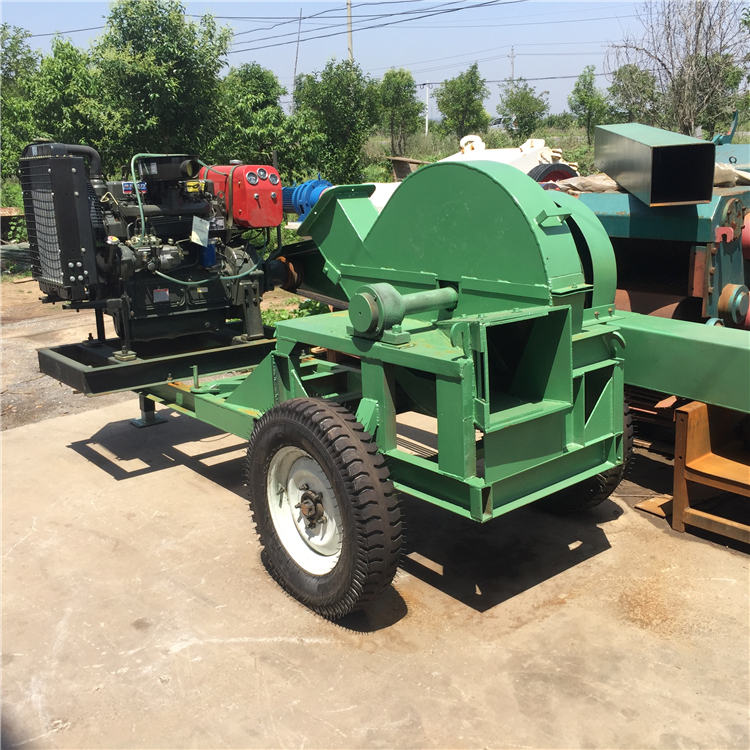
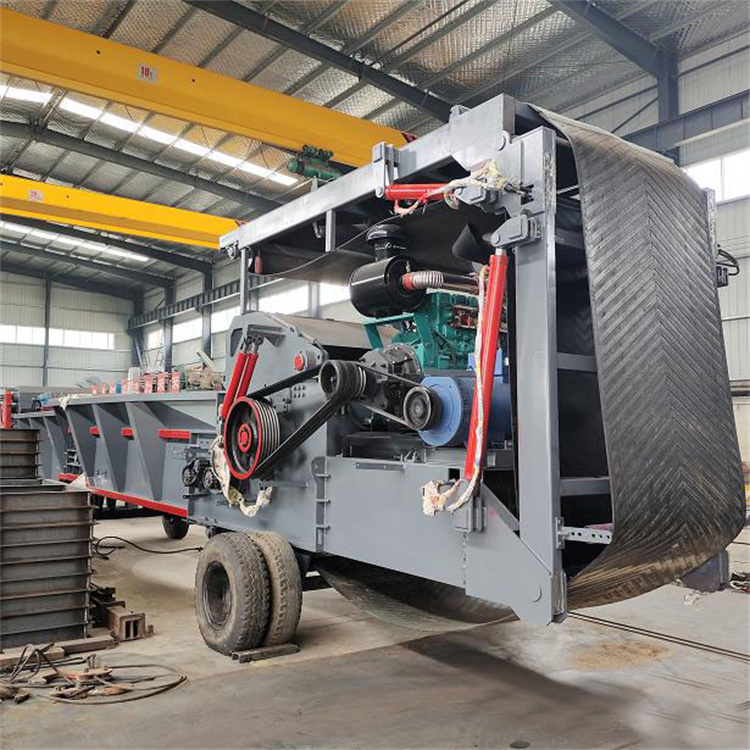
One machine that has been gaining attention among arborists is the Henan Manto Machinery Equipment Co., Ltd. mobile drum crusher series. These units combine a heavy‑duty drum with a reliable diesel engine (options from 75 HP to 300 HP) and a rugged towable chassis. Several tree service owners I’ve talked to in the Southeast say the Manto machines hold up well against the usual suspects like Morbark and Bandit, but at a more accessible price point. And parts availability has improved dramatically over the past few years.
What Capacity Do You Really Need?
Let’s talk numbers. You don’t need a monster 20‑inch machine if your average tree is a 12‑inch maple. Oversizing costs you fuel, maintenance, and purchase price. Undersizing kills your productivity.
Here’s a rule of thumb from real tree service pros:
-
Small crew (1–2 trucks) – Look for a crusher that handles up to 10‑inch diameter limbs. Throughput around 15–25 tons per hour. Engine: 75–120 HP.
-
Medium crew (3–5 trucks) – 12‑inch to 15‑inch capacity. Throughput 30–50 tons per hour. Engine: 150–250 HP.
-
Large crew (6+ trucks / land clearing) – 18‑inch or larger. Horizontal grinders might be better at this scale, but a high‑capacity drum chipper (250–400 HP) can still work.
Pay attention to feed opening dimensions, not just advertised “max diameter.” A machine that claims 12 inches might choke on a 12‑inch oak crotch because the feed opening is only 10 by 14 inches. Look for a large, square or rectangular feed hopper – that’s what lets you stuff in bushy branch tips without constant pruning.
Top Features to Look For in a Commercial Tree Service Wood Crusher
After spending too many hours in repair shops and on muddy job sites, I’ve boiled down the must‑have features. Don’t buy a machine that skimps on any of these:
1. Easy Knife Access and Reversible Knives
You will hit rocks. You will hit fence wire. And you will occasionally hit a forgotten lag bolt. When that happens, you need to change knives fast. Look for a wood crusher with a large, accessible knife pocket and knives that have two or four cutting edges (reversible). Some machines let you swap a set of knives in 20 minutes. Others take two hours. You do the math on lost revenue.
2. Auto‑Feed with Sensor
The best industrial wood crusher for tree companies has a feed roller that senses engine load. When the engine bogs down, the roller stops or reverses to clear the jam. This isn’t a luxury – it’s a productivity lifesaver. Without auto‑feed, you’ll have one guy feeding and another constantly babying the throttle. With it, one operator can feed steadily while the machine optimizes itself.
3. Durable Discharge Chute with Rotator
You don’t want to climb up and manually swing a heavy chute every time the wind shifts. A hydraulic or manual rotator that lets you aim chips directly into a truck or pile is worth its weight in gold. And make sure the chute is made of thick steel – thin chutes crack at the welds within a year.
4. Service‑Friendly Design
Check where the oil filter, fuel filter, and hydraulic dipstick are located. If you have to remove a dozen bolts or crawl under the machine, the manufacturer didn’t design it for real‑world tree guys. A good crusher has everything reachable from ground level or a small step.
5. Strong Axle and Brakes
Tow‑behind crushers can weigh 3,000 to 10,000 pounds. That’s a lot of metal bouncing down the highway. Look for a Dexter or similar torsion axle, electric brakes on both wheels, and a safety breakaway system. Cheap axles bend after a few thousand miles.
How Much Should You Expect to Pay?
Prices vary wildly. A small, homeowner‑grade gas chipper might cost $3,000, but it won’t last a month in commercial service. For a true heavy duty wood crusher built for tree companies, here’s a realistic range:
-
Used, well‑maintained drum chipper: 15,000–40,000
-
New, mid‑range Chinese brand (like Henan Manto Machinery): 25,000–55,000
-
New, premium American brand (Morbark, Bandit, Vermeer): 50,000–120,000+
Yes, that’s a huge spread. And I’ve seen budget machines from Henan Manto Machinery Equipment Co., Ltd. run side‑by‑side with $80,000 Bandits in real tree service fleets. The Manto units needed a few small tweaks (replacing Chinese hydraulic hoses with Gates or Parker, adding extra lighting), but after that, they chipped just as fast and broke less often than expected. The key is buying from a supplier that has a local parts warehouse and offers decent technical support – something Henan Manto has been investing in heavily for the North American and European markets.
Maintenance Secrets That’ll Save You Thousands
Let me share a few lessons from the school of hard knocks:
-
Sharpen knives every 20‑30 operating hours – Dull knives make the crusher work harder, waste fuel, and produce ragged chips nobody wants to buy. Buy a spare set so you can swap and sharpen offline.
-
Check the anvil gap weekly – The gap between the knife and the anvil should be about 1/32 to 1/16 of an inch. Too wide, and you get stringy chips. Too close, and knives wear prematurely.
-
Grease bearings daily – Use a battery‑powered grease gun and hit every fitting before the first job of the day. Neglect this, and you’ll be replacing a $500 bearing on a Sunday afternoon.
-
Install a magnetic separator – A strong magnet over the infeed conveyor catches nails, wire, and broken saw blades before they reach the drum. Cheap insurance.
The Verdict: Which Wood Crusher Is Best for Your Tree Service?
After all that, you’re probably thinking, “Just tell me which model to buy.” I wish it were that simple. But the “best” machine is the one that matches your typical tree sizes, your crew’s mechanical skill, and your budget.
If you’re a small to medium company doing mostly residential removals, I’d point you toward a 12‑inch drum chipper with auto‑feed and a towable chassis. Brands like Morbark (the M12R or similar) are the gold standard, but the newer offerings from Henan Manto Machinery are worth a serious look – especially if you’re price‑sensitive and willing to do a little initial setup work. Just be sure to buy from an importer that stocks parts locally.
For larger land‑clearing operations, skip the drum chipper and go straight to a horizontal grinder. But that’s a topic for another article.
One last piece of advice: before you buy any commercial tree service wood crusher, rent one first. Spend a week with the model you’re considering. Chip the nastiest, most twisted, muddy wood you can find. See if it jams, how easy it is to clear, and whether your crew actually likes running it. A machine that sits parked because nobody wants to feed it is a machine that’s losing you money.
Get the right crusher, treat it well, and it’ll pay for itself in a year – maybe faster. Get the wrong one, and you’ll be cursing it every time you see a pile of branches. Choose wisely.